A Lion’s yawn shows its lingual frenulum
This male Lion is having a bit of a yawn.
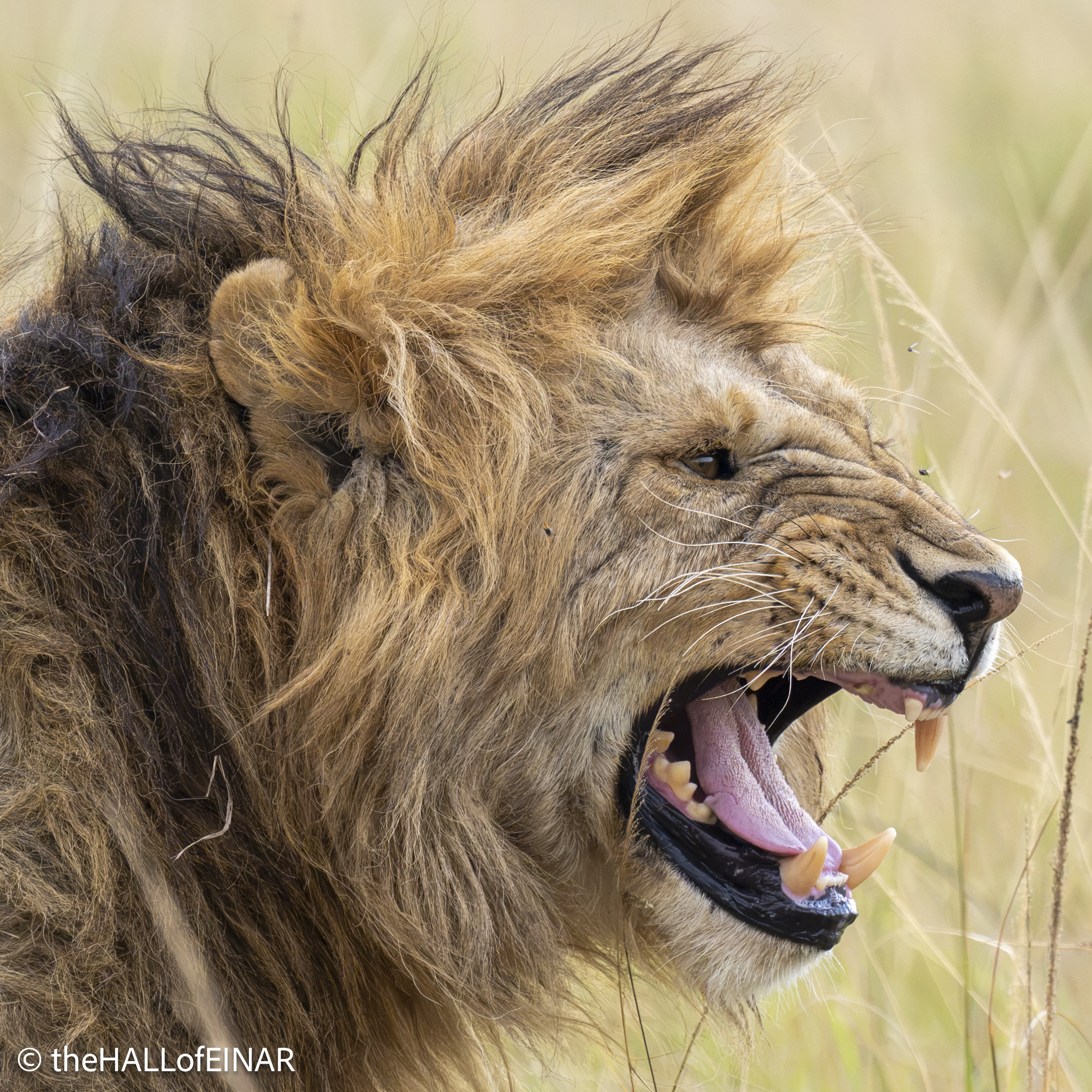
I adore the wrinkles on its nose and its wavy, wiry whiskers.
The contrast between the raggedy mane, with its ultimate bedhead look and matted pre-loved teddy-bear look and its wet pink tongue is extreme.
It’s a great way of seeing its sublingual frenulum, the thin piece of connective tissue which joins the base of the tongue to the floor of the mouth. It’s a very practical thing to have evolved, as there might be a danger of swallowing your own tongue without it.
Sublingual means under the tongue and frenulum means little bridle.
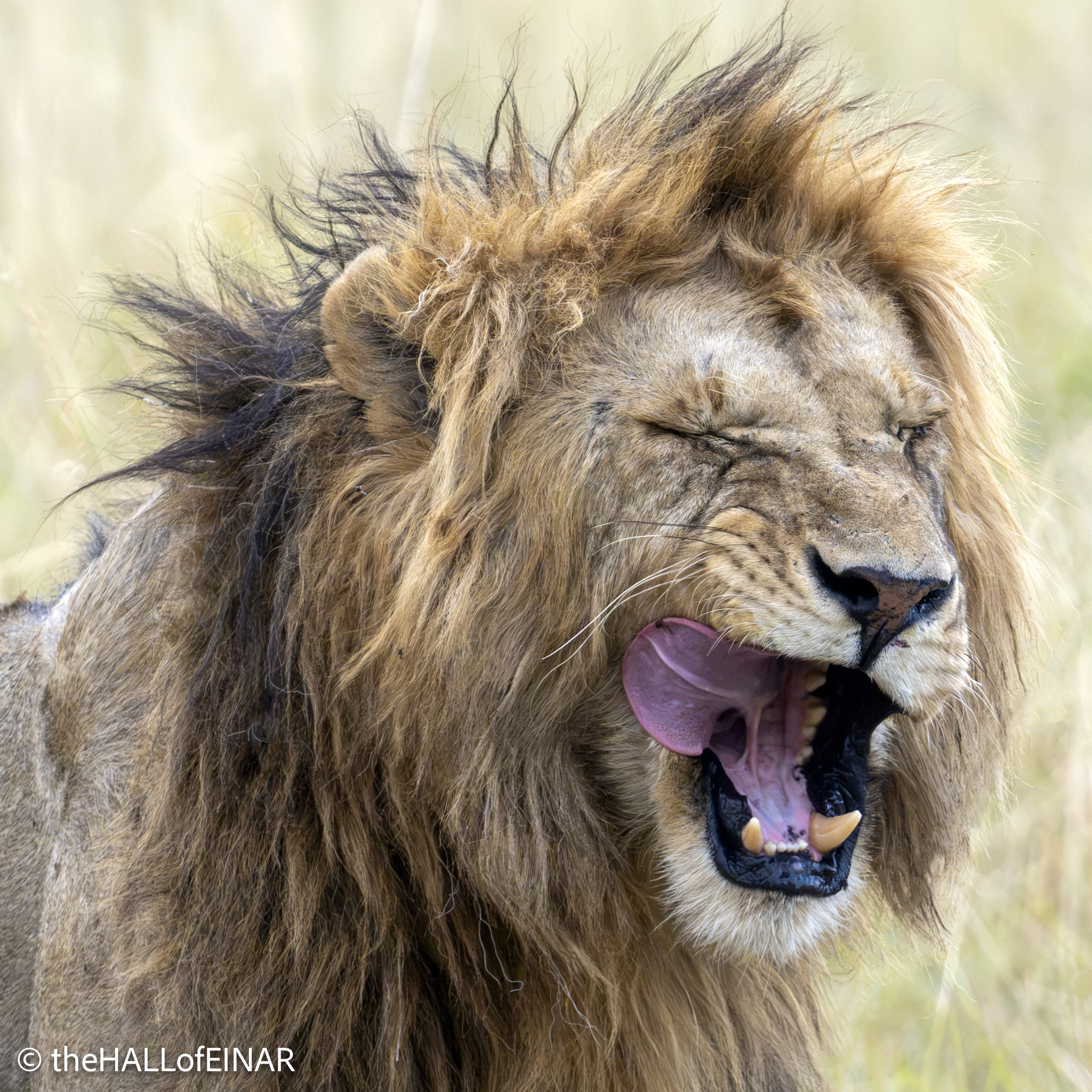
The under-the-tongue-little-bridle is just long enough to allow a lion to lap up water when it’s thirsty. Right next to the base of the sublingual frenulum are the salivary glands.
Can you see how textured the Lion’s tongue is? It’s full of backwards facing hooks made of stiff keratin which it uses to strip meat from bones. The spikes with hooks are called filiform papillae. Filiform means like a thread and papillae, which originally meant nipples, came to mean anything like a pimple. Lions can strip meat from bones with their tongue. Cool.
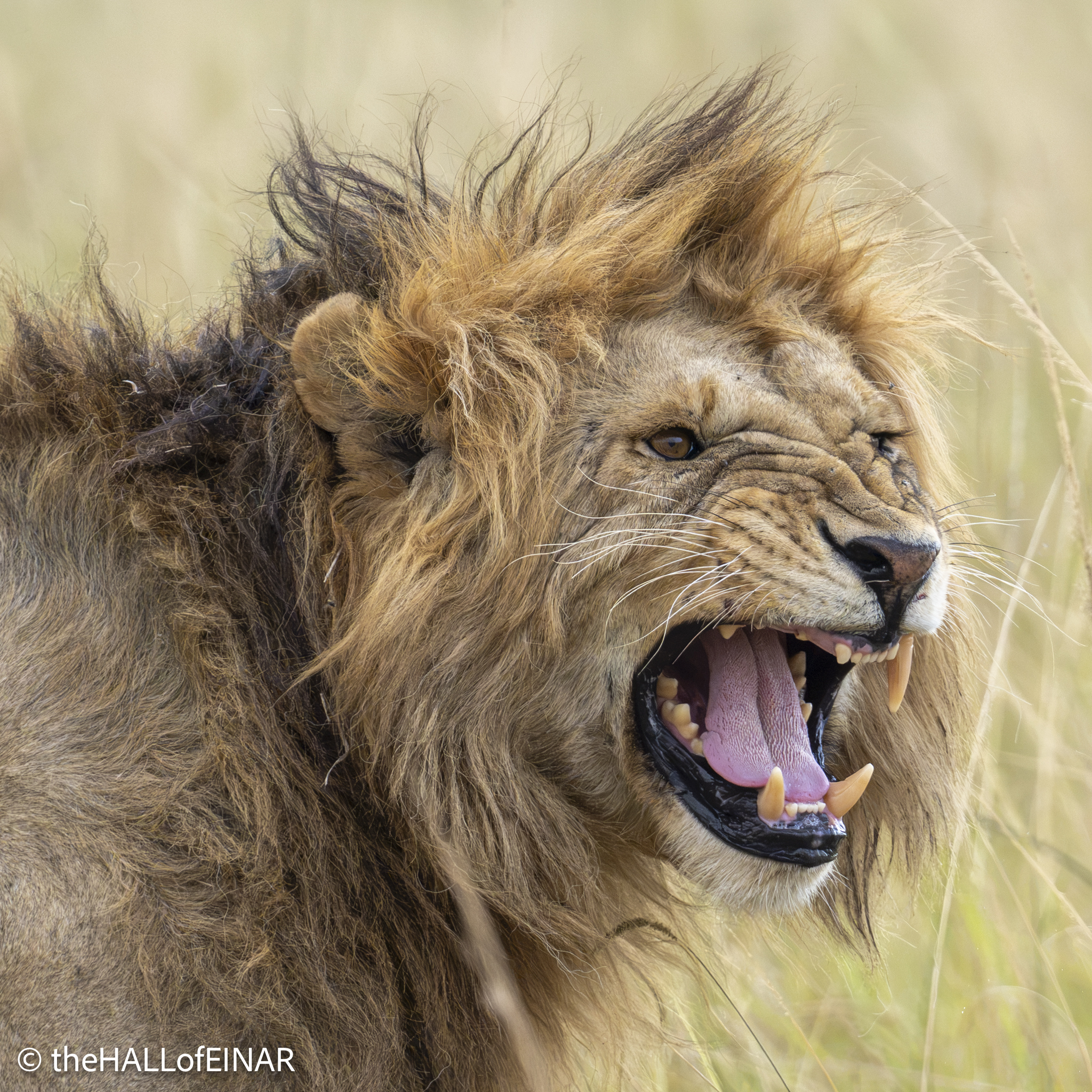
This one has only three of its four canine teeth.
That doesn’t seem to worry it.
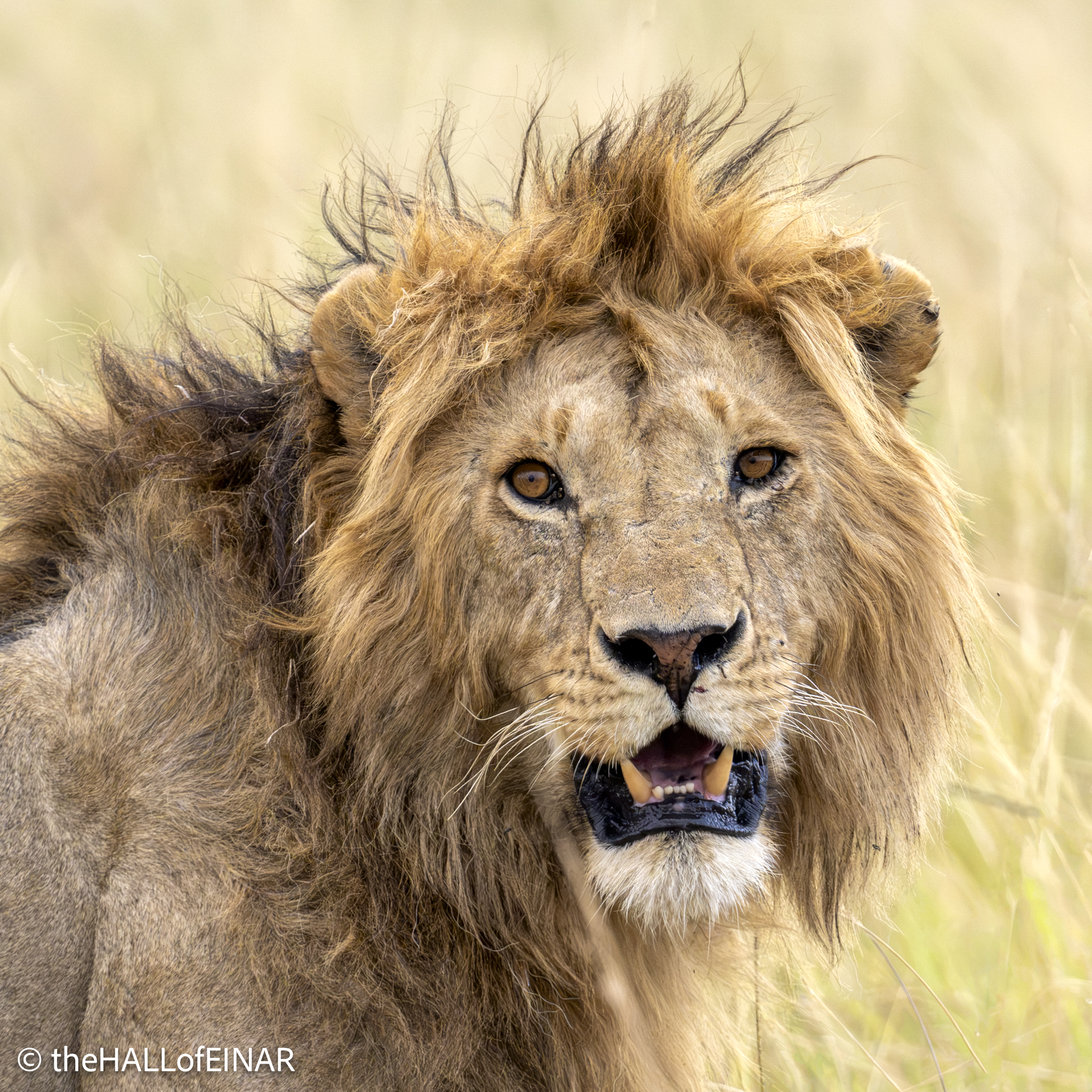
I might get worried if he carries on looking at me like that, though. I don’t fancy having the meat stripped from my bones.