Basket weaving with Kithoto Women Group, Kyeengai
We are on the Institution Bus again, in rural Kenya, headed out from Wamunyu along dirt roads to Kithoto Women Group in Kyneengai. Elizabeth’s homestead is her home where she meets with other mothers and grandmothers. They have a great thing going. They meet to socialise, to educate one another, and to run small businesses. Today is all about their stunning basket weaving.
As we arrive, our chief, Sharon, warns us all to have our cameras ready before we get off the bus. It’s no use for me. I’m last off the bus and the singing and dancing greeting has already happened and there’s a procession from the bus to Elizabeth’s homestead heading away from me.
As we amble down the path I’m delighted to see there’s a song and dance greeting in the courtyard.

I particularly admire their ability to ululate. I don’t join in. All that wiggling your tongue from side to side and making a noise is fabulous.

One of our volunteers, Taryn, has a go at stripping the flesh off sisal leaves to leave only the stringy fibres. She winds the long leaf around her hand and drags it out between two metal plates embedded in a tree stump. When one half is done, she turns it around, grabs the stringy fibres and does the same with the other fleshy half. It’s then time to leave the fibres to dry before the strands can be twisted by the women into durable thin rope.

The strands can be left a natural colour or dyed using a variety of natural dyes using leaves, roots and ash. Here’s a small-scale demonstration using a wood fire and a metal pot.

Here’s volunteer Lindsey being shown a classic two-colour woven basket. They are intensely beautiful.

Here are three of the women giving a demonstration of the processes involved.

I love the faces of the people here. And the materials are fabulous.

There’ll be a chance for us to have articles made by the LitMoms using these wonderful prints. It’s another of the income generation opportunities offered by Kenya Connect, along with beekeeping. I fancy a shirt made by them.
After singing, dancing, introductions, demonstrations, hands-on experience, and refreshments, it’s time for the market, where we all get a chance to buy a hand-woven basket. It’s a scrum. As you know, I don’t buy dust-catchers and I have no room in my luggage for anything.
Naturally I buy one.
I do check later when I’m back in my tent whether I’m able to waggle my tongue and make a noise at the same time and am delighted to find that I can ululate and also delighted that no-one else can hear me. Having said that, my tent walls are pretty thin. I wonder what the other volunteers here think of my outburst of ululation?
Best not to mention it.
More adventures in Kenya
 A Chestnut-Bellied Sandgrouse isn’t a grouse at all There's a male Chestnut-Bellied Sandgrouse on the rough ground in front of the lake. They are quite large birds and,… read more
 A Black-Headed Heron comedy moment One noticeable thing about being in Kenya is the sheer numbers of different species here. There's clearly a very productive… read more
 A Squacco Heron Squacco Herons are migratory. They breed in Southern Europe and the Middle East and winter in Africa. They are also… read more
 An African Fish Eagles’ nest can last for decades It's huge and the birds are unmistakable. We saw an African Fish Eagle incredibly close as soon as I arrived… read more
 A first sight of Kilimanjaro, my friend Ebo, and a Hamerkop We must be near the border between Kenya and Tanzania. I know that because the huge mountain over there is… read more
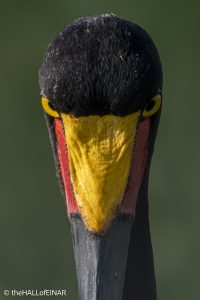 Close-up of a female Saddle-Billed Stork This Saddle-Billed Stork or Saddlebill, Ephippiorhynchus senegalensis, is huge. I've seen them already, back in the Masai Mara. Here's my… read more
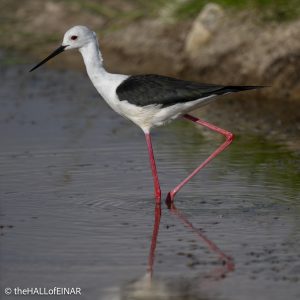 The extraordinary Black-Winged Stilt There's a Black-Winged Stilt, Himantopus himantopus, in the drainage channel by the side of the dirt track here in Amboseli. Black-Winged… read more
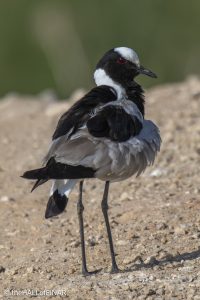 Blacksmith Plovers and broken down 4x4s Our guide, Emmanuel, is young, enthusiastic, and wise beyond his years. When he has a major problem with our 4x4… read more
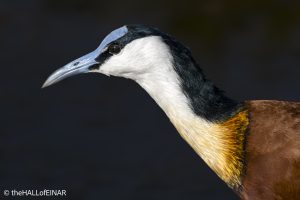 Male African Jacanas raise all the chicks Having so much food available changes the dynamics between the sexes of African Jacanas. They're a rare example of polyandry.… read more
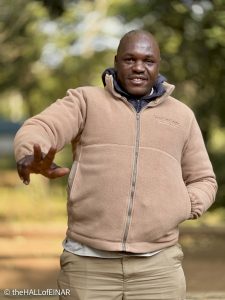 Johnson and the Ross’s Turaco The Governors' Camp in the Masai Mara has been a wonderful place to stay. Having breakfast with Common Bulbuls eating… read more
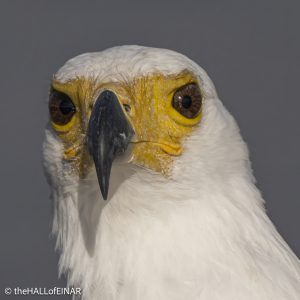 The first bird we see on arrival is an African Fish Eagle We're on our first drive from the camp in Amboseli, on safari in Kenya, when we see the first bird… read more
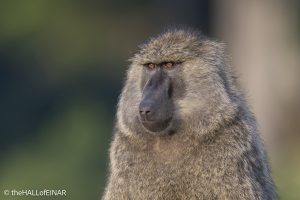 A troop of Anubis Baboons It's my last day in the Masai Mara and my last trip out in a 4x4 here. I'm about to… read more