My first day in Kenya
I’m off to Kenya volunteering on a literacy programme based in Wamunyu, two-hours east of Nairobi. I’m going to be with colleagues from a charity called Kenya Connect. Kenya Connect partners with students, teachers and parents at 90 schools in rural Machakos and Kitui counties. Their aim is to give children options in their lives. That’s exactly the sort of thing which motivates me, given the options I’ve had in my life, since getting a library card as a baby, and learning to read before I went to school.
We’re going to be travelling out to rural schools, running groups for parents and pre-schoolers, and reading books and singing songs with older children. I don’t know what to expect. I’ve never been to Africa before. I’ve been dreaming of visiting Africa to see the wildlife since I was eight years old and got my first book, A Treasury of Natural History, by Bertha Morris Parker. I’ve still got the book and look at it occasionally. I remember the power of seeing the painting of the Elephant for the first time as if it was yesterday. After the eight days volunteering I’ll be heading off around Kenya on safari, aiming to see as much wildlife as possible. I hope you’ll enjoy coming with me on the journey. I can’t wait to share it with you.
My day starts at 4:45. I’ve got to get up and dressed and looking presentable after a night sleeping in my van in a car park in Oxford. A taxi is arriving soon to take my colleague Liz and me to Heathrow Airport. I have a large, yet very light, suitcase to check-in, and a small, and very, very heavy bag full of photography gear, which I am clutching tightly. I can’t afford for it to get smashed. The taxi journey is smooth and uneventful.
The flight to Kenya takes 9 hours or so. We set off at 9:45am UK time and arrive at 9:00pm Kenya time, with the two hour summertime difference between our countries making up the extra hours.
We are picked up in the dark outside the airport In Nairobi by our driver for the week, Danson, who drives the Institution Bus to our hotel, and we give brief hellos to other members of our volunteer team. We are staying at The Radix Hotel, in Nairobi for our first night. It’s easy to get to from Jomo Kenyatta International Airport by going on the southern bypass. Perfect.
I’m up early after a short night’s sleep and out into the hotel car park with my camera before anyone else is up for breakfast. It’s overcast and a little muggy, but not too warm.
Here’s the hotel entrance. It could be any hotel anywhere in the world.
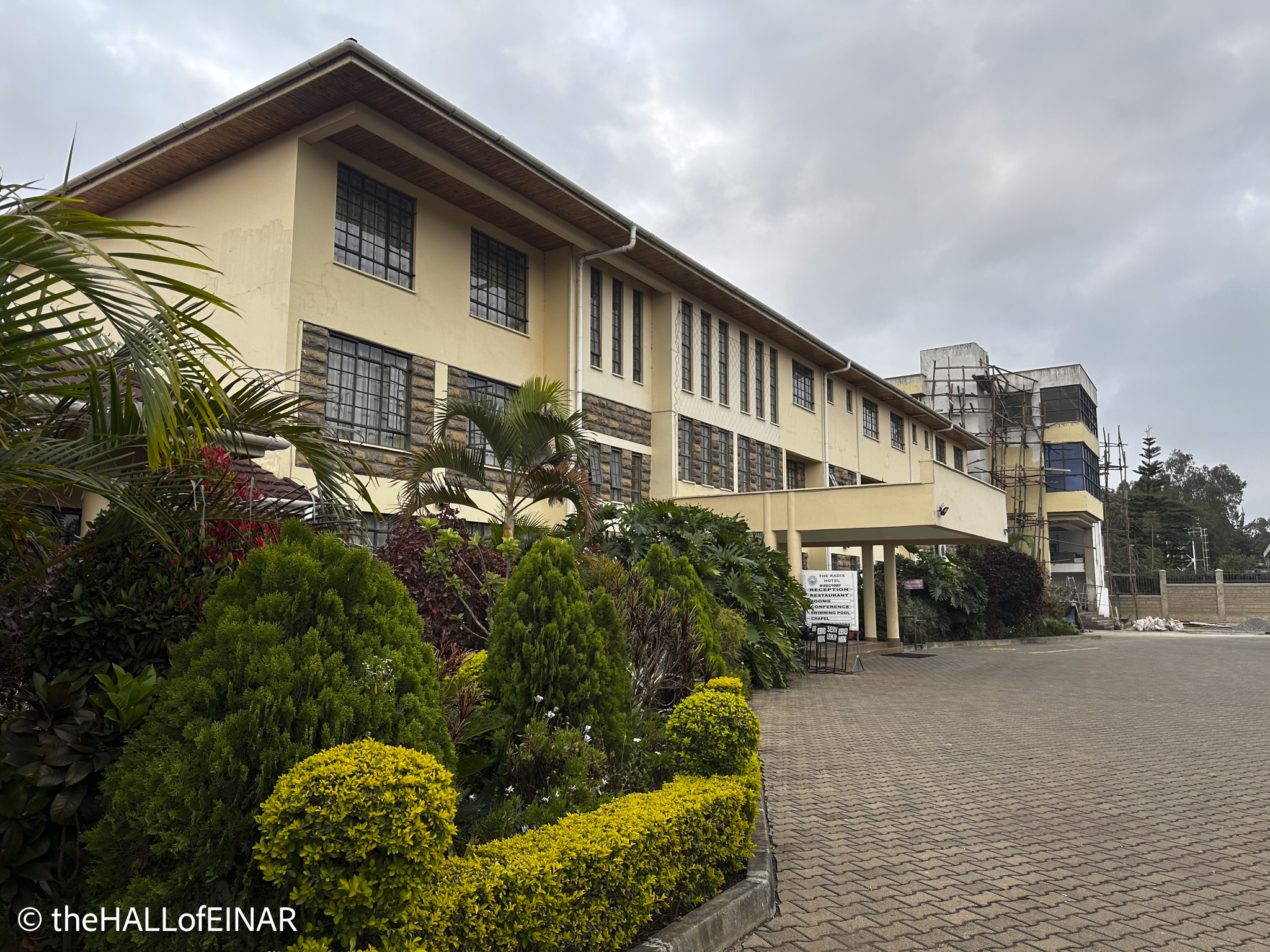
Actually, it couldn’t. What’s that wooden structure on the far building? It looks like an art installation.
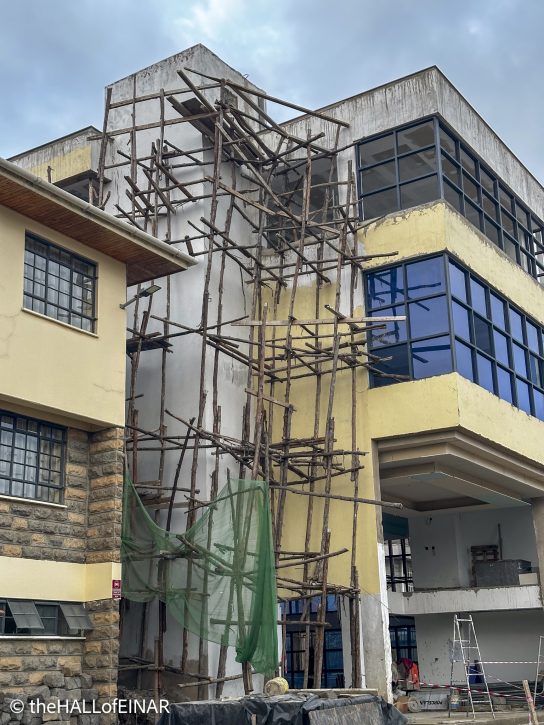
Is that… scaffolding? Really? It looks like it’s collapsed and the area has had to be abandoned after a health and safety inspection. I wander closer and realise that it really is scaffolding, and that this is what it’s meant to look like, and that it’s normal for Kenya. I need to adjust my expectations.
I turn my attention to the birds.
In these beautiful lilac fronds there are tiny sociable finches gripping onto stems and retrieving seeds with their nimble beaks.
They have a glossy black head, a bronzy-brown back, and a distinctive two-colored bill which is black above and pale blue-grey below. They are tiny, just 9–10 cm long. They are Bronze Mannikins, Spermestes cucullata. Cucullatus means hooded.
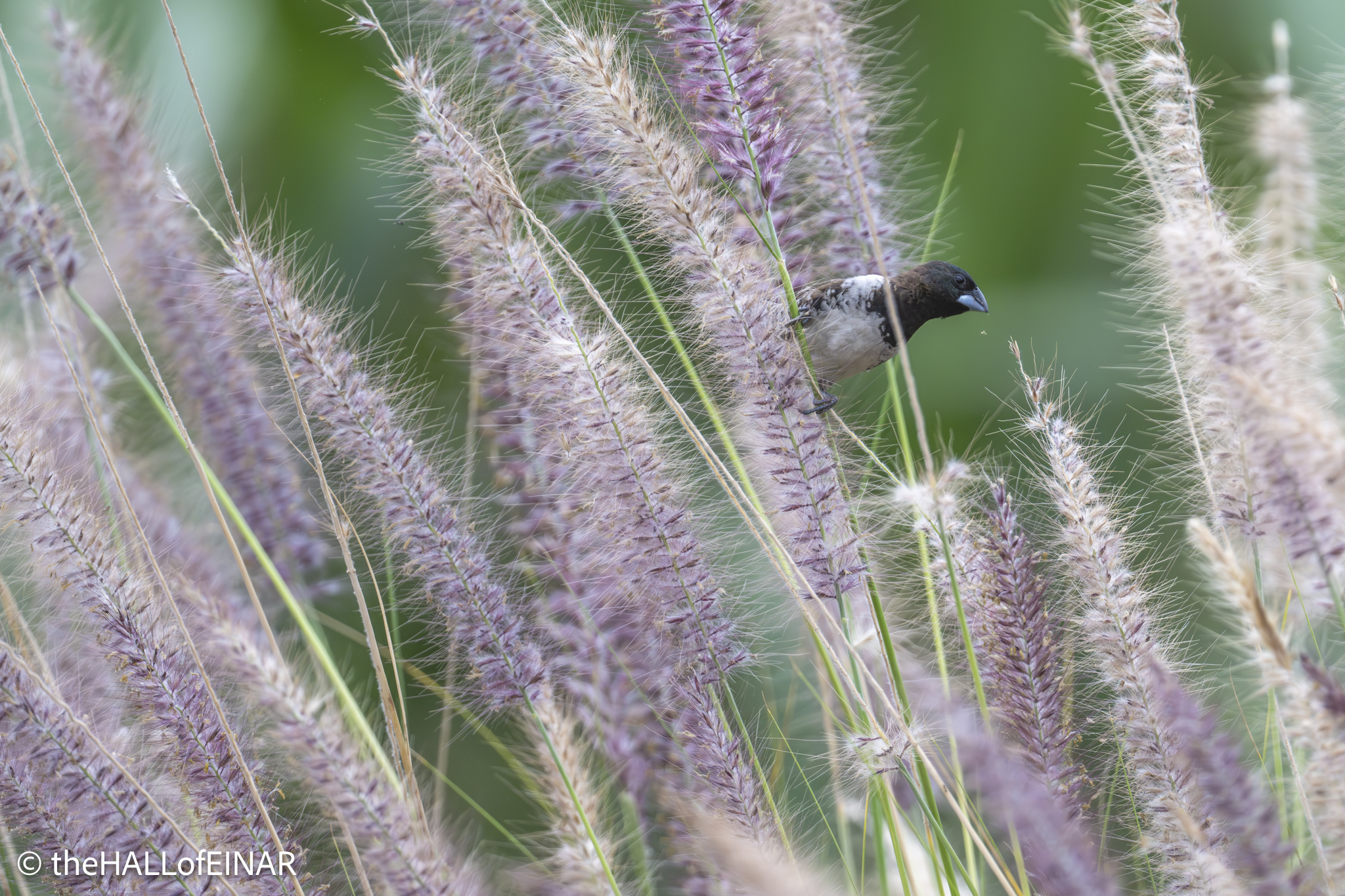
They’re beautiful and an entirely new species to me.
So are the next birds to grab my attention in The Radix Hotel car park. I know Kenya has Sunbirds and that they have long down-curved bills and even longer tongues. These must be Sunbirds:
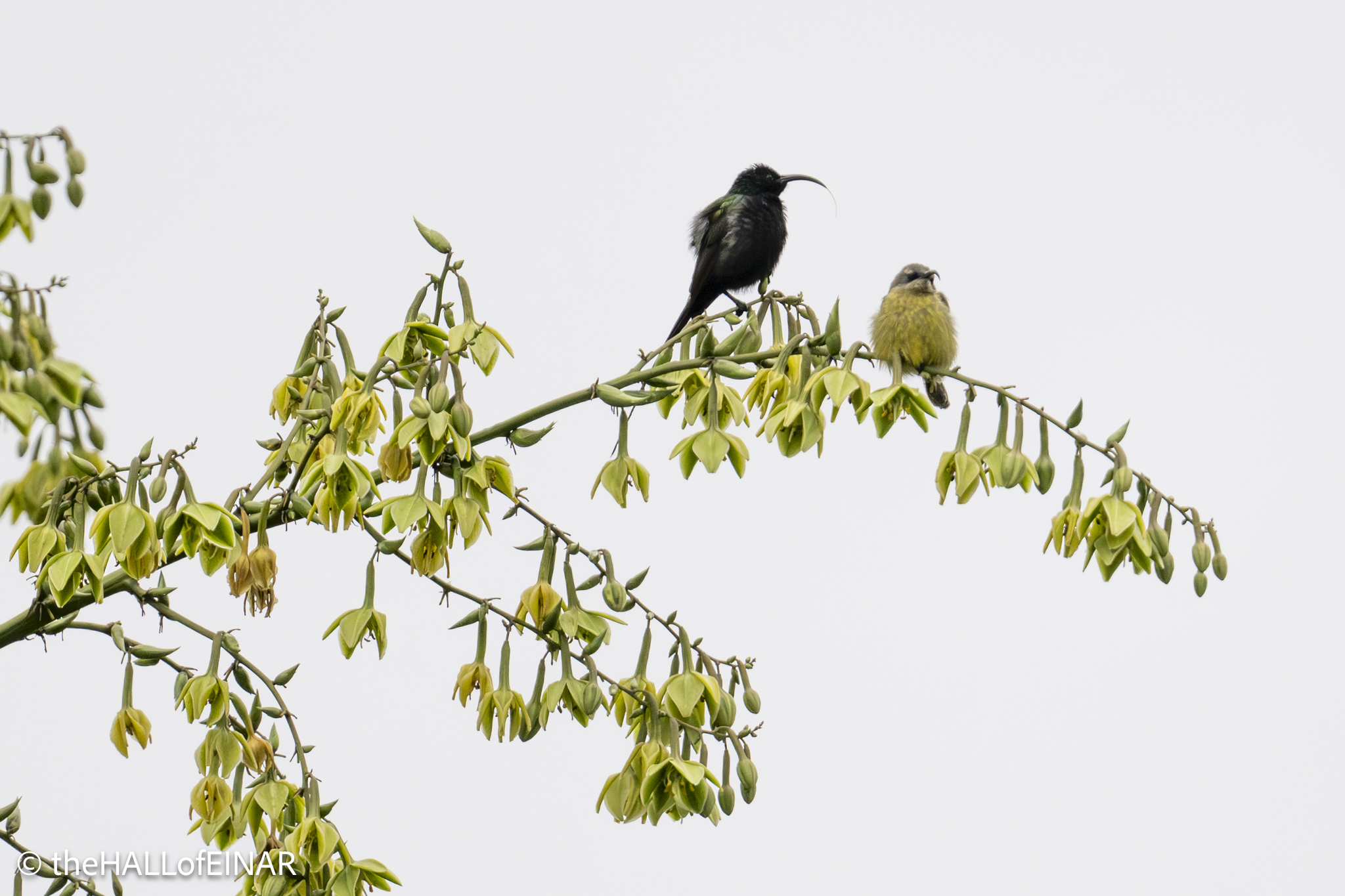
They’re very different from each other, and yet appear to be together, so I’m guessing they are a male and female pair. They are Bronze Sunbirds, Nectarinia kilimensis. The males have a bronze-and-green iridescence, though the books say they look black in most light. I can just about see that there’s some iridescent green on its back. The females have a pale eyebrow and faint streaking on yellow plumage. That checks.
Their beak and tongue are adapted for feeding on nectar, although they also eat insects. I’m sure there are stunning close-up photographs of them taken by other people, but this one will have to do for me for now.
Round the back of the car park I can see Swallows perched on the ground. I’m not yet ready to lie on the ground, so these slightly elevated views will have to do for now. This isn’t the usual Swallow I’m used to, it’s an African Red-Rumped Swallow, Cecropis melanocrissus emini. As it takes off I can see its long wings and exceptionally long tail.
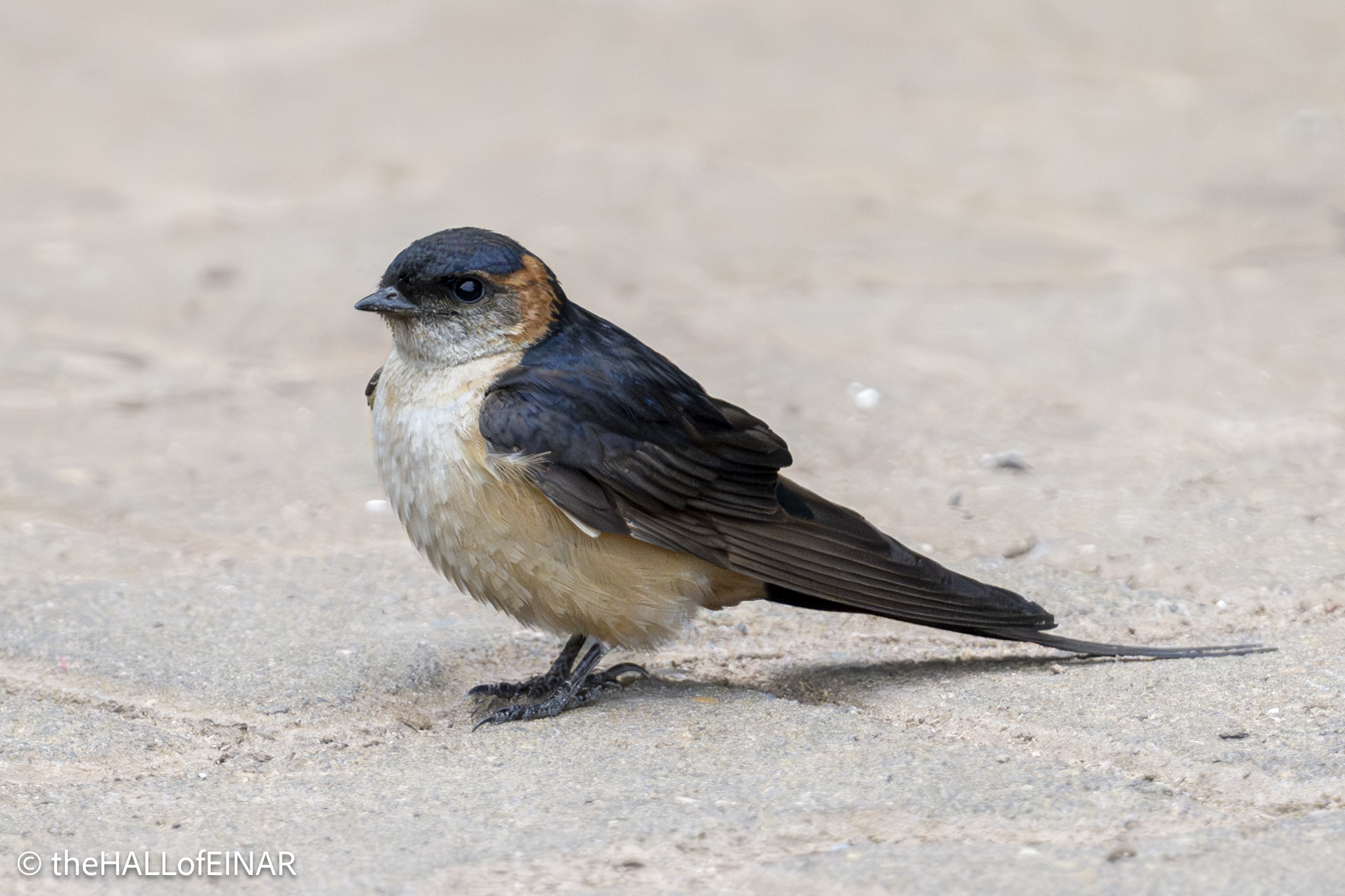
It’s not the only Swallow here. There’s at least one other species with it. There’s one with a reddish head and a striped breast. It’s a Lesser Striped Swallow, Cecropis abyssinica unitatis.
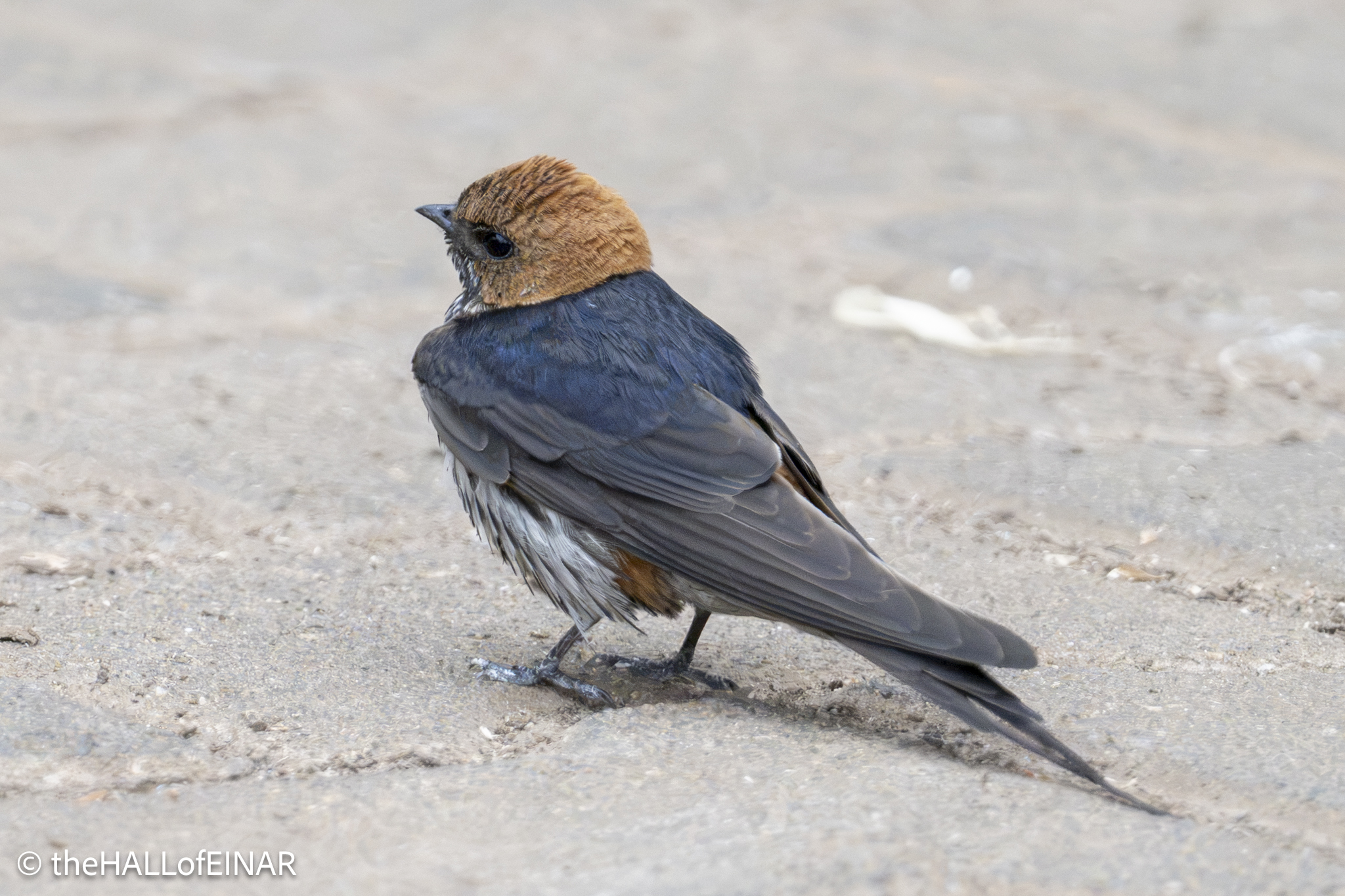
I can’t get a better photograph of it before a truck drives past and it flies. What a lovely bird.
There’s a small flock of medium-sized mousey-brown birds with very long tails which has just flown past me. They look amazing. Their tails look as if they will drag them down and are far too long to let them even reach the next bush. I’m going to investigate the bushes they are in. It looks like they have planted Australian Bottlebrush plants here in the hotel car park.
The birds are Speckled Mousebirds, Colius striatus. They are very mousey coloured and speckled. It seems like a fitting name.

They seem to be embedded in the bushes, always half-hidden. Maybe they’re delicious? I’ll just have to hope for better views later.
There’s a musical song, like that of a thrush, coming from the top of the hotel building. It doesn’t fit the bird it appears to be coming from, which looks like a seed-eating bruiser.
It’s a Streaky Seedeater, Crithagra striolata.
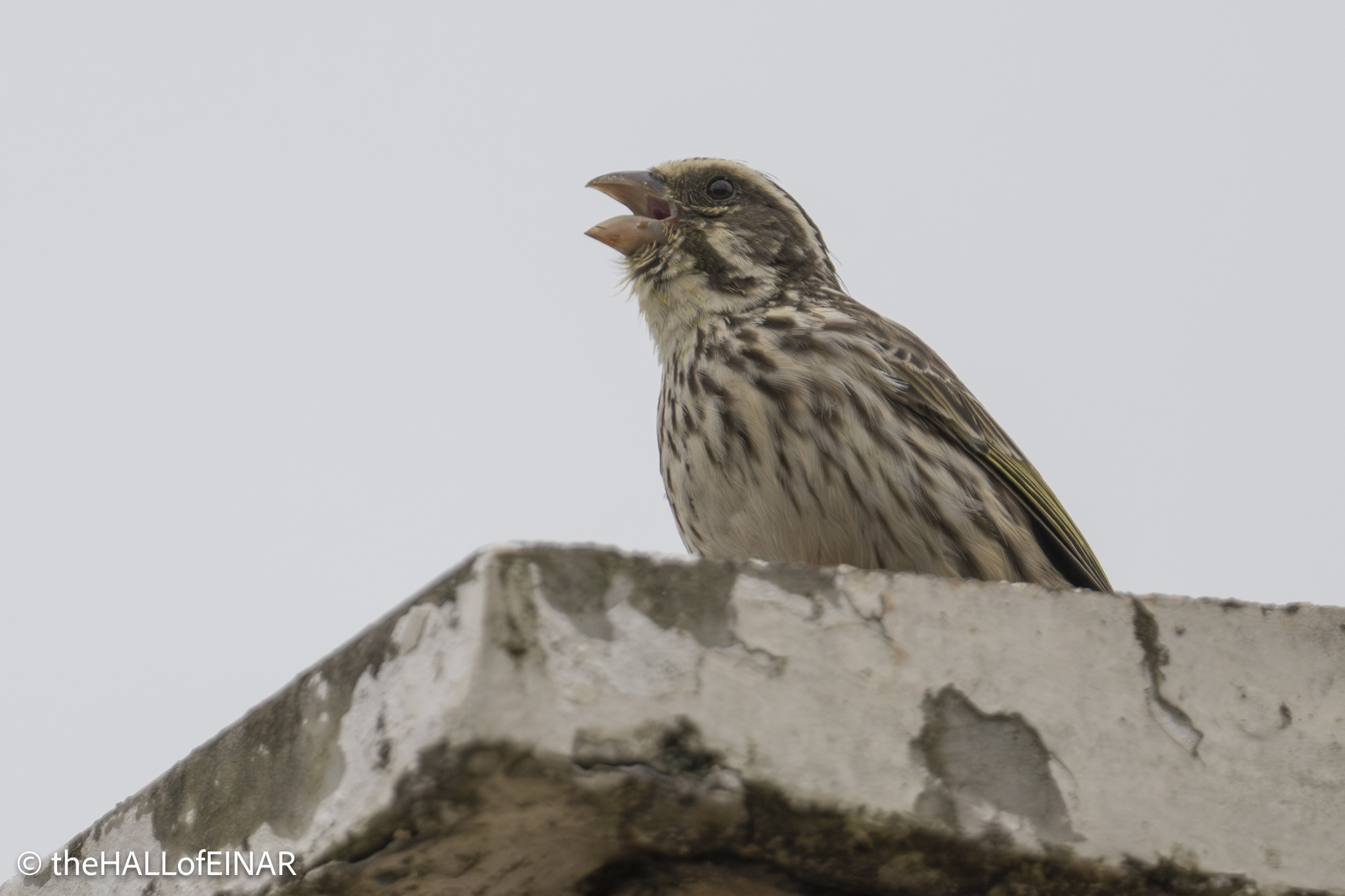
Beautiful
Then there’s a flash of bright yellow.
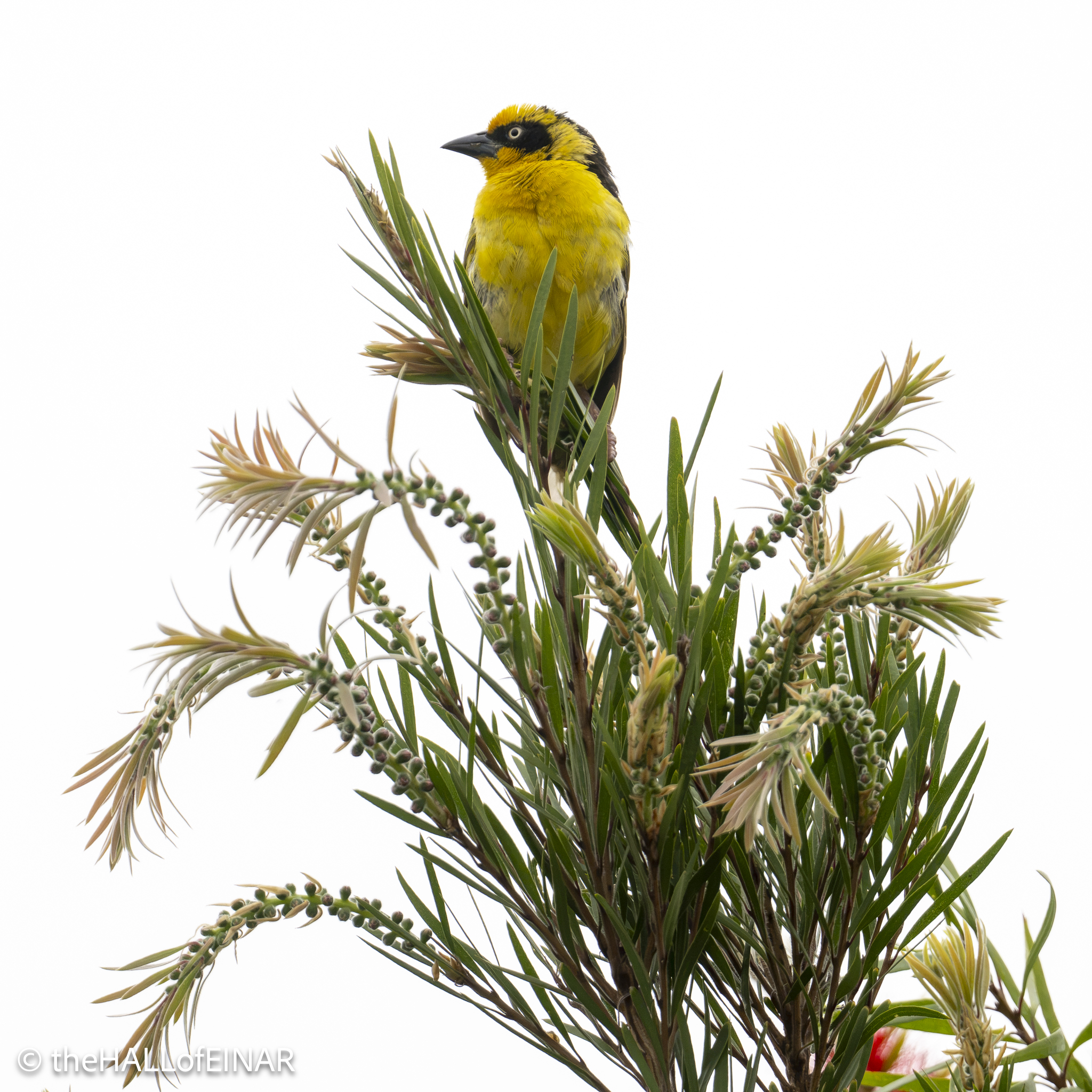
It’s a Baglafecht Weaver (Reichenow’s), Ploceus baglafecht, and looks great at the top of this bush.
I get a closer view:
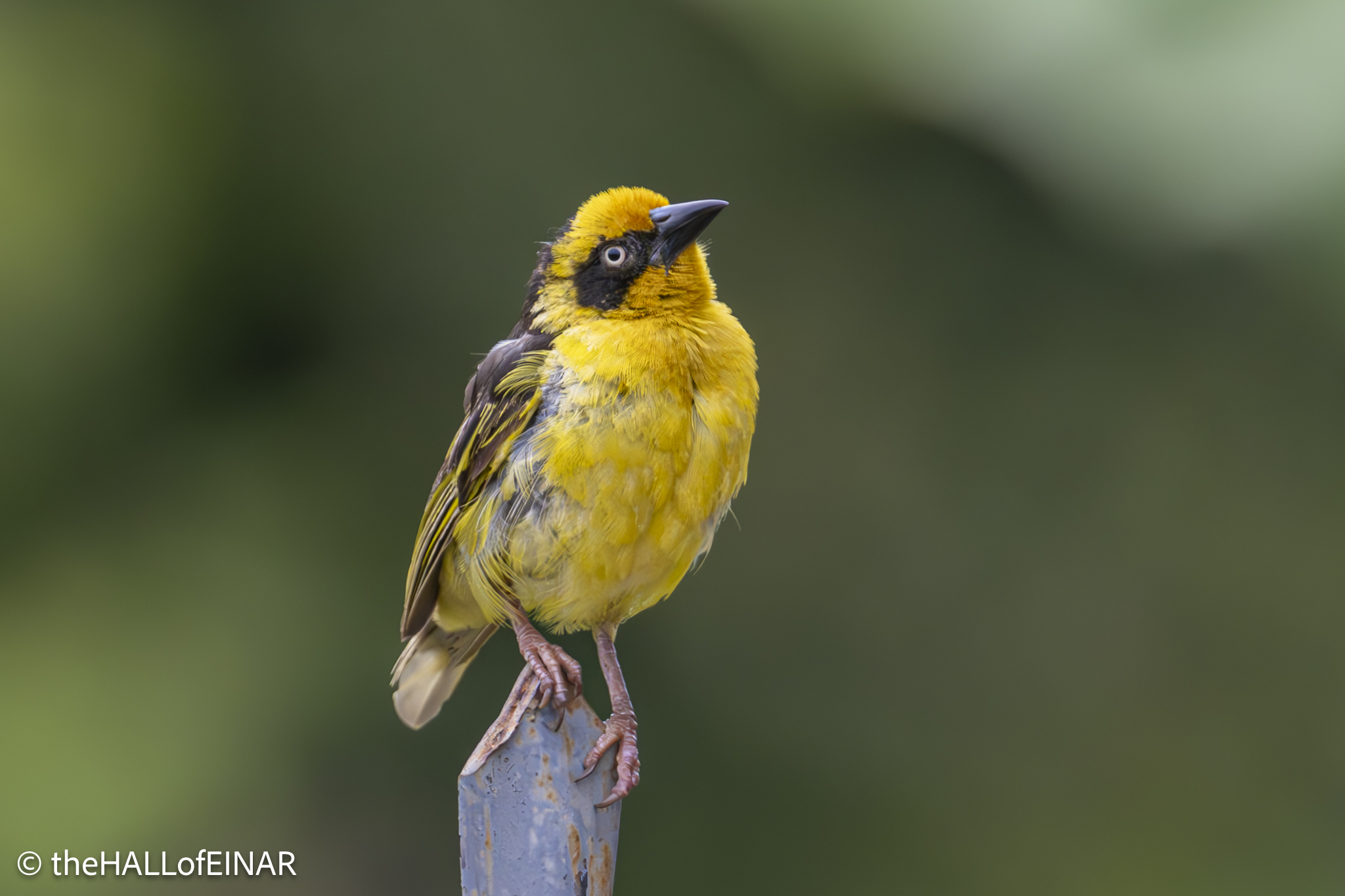
Wow!
That’s seven new species to me and I haven’t even left the hotel car park or had breakfast yet. I suspect Kenya is going to be wonderful.
As I walk back to the main entrance I see two large black and white Crows. They are a pair of Pied Crows, Corvus albus, and the male is feeding the female.

They are great.
There’s another black and white bird I recognise. In fact it’s another pair. I can recognise a Shrike from my experience photographing them before. This is a different species for me. It’s a Common Fiscal Shrike, a Southern Fiscal, or a Jackie Hangman, Lanius collaris. This is the female, with a gentle chestnut streak along the flanks.
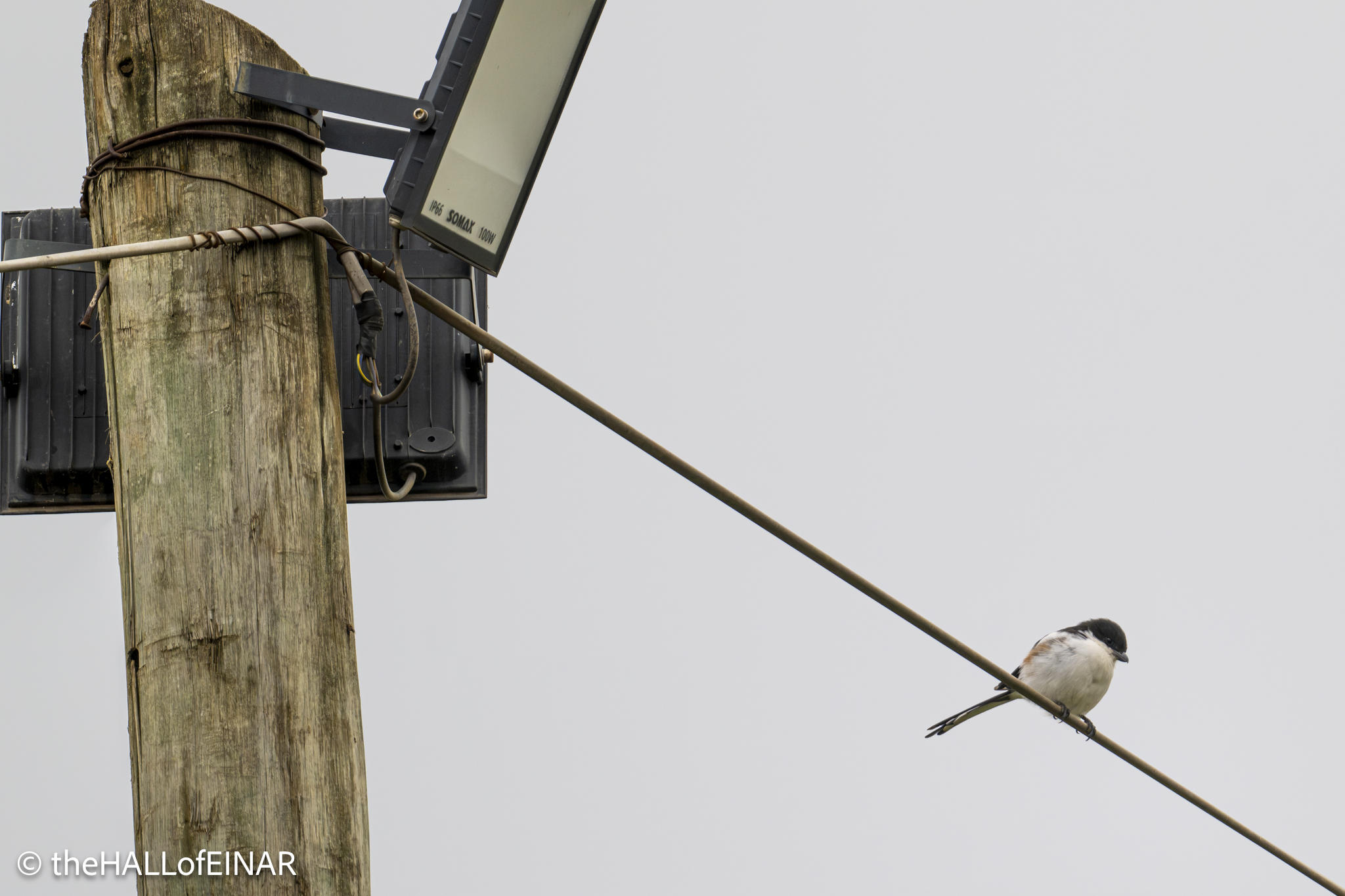
Nine species.
And another I can’t identify yet.
We’re due to visit a wildlife rescue centre on the route to Wamunyu today. I can’t wait.
It’s time to go and eat breakfast in the hotel restaurant. I’m about to meet my new friend Scott.
More adventures in Kenya
 Common Drongos Today's another chance for me to appreciate Common Drongos. They have distinctive forked tails and intense red eyes set in… read more
 Lilac-Breasted Roller attack Sometimes there's such an extraordinary moment and it seems impossible that you could have captured it. There's a dispute between… read more
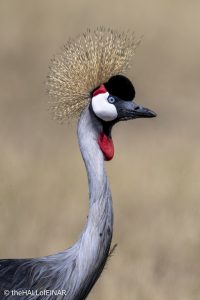 Grey Crowned Crane It's one metre tall and has a two metre wingspan. It has a ridiculous crown. It has an inflatable red… read more
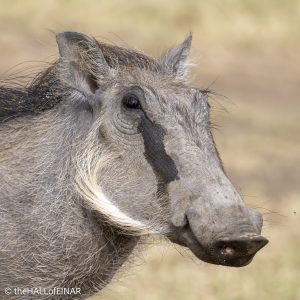 Can you kneel on your wrists? Common Warthogs are fabulous creatures. Just look at that hairy face! I love this one's blonde moustache and perky tail.… read more
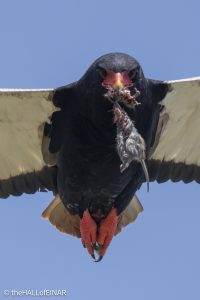 The street performer – a Bateleur Eagle with a rat We spotted a Bateleur Eagle as soon as we arrived in the Masai Mara. It was distant. All I could… read more
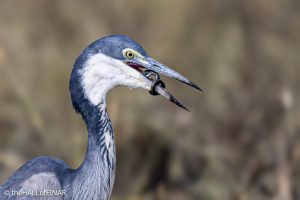 Black-Headed Heron There's a Black-Headed Heron with what looks like a snake. I know they eat fish and amphibians, but I didn't… read more
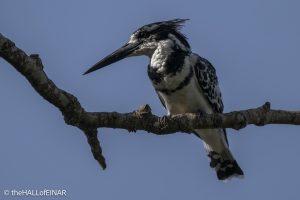 A male Pied Kingfisher There's a perched male Pied Kingfisher on a branch nearby here in the Masai Mara. They are large, impressive birds.… read more
 Cattle Egret portrait I've seen Cattle Egrets in Devon, but never been as close as I am now to this Cattle Egret in… read more
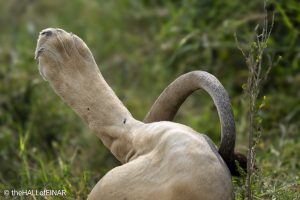 Playful Lion There's nothing more fulfilling in wildlife photography than having an animal be completely relaxed in your presence. Seeing a lion… read more
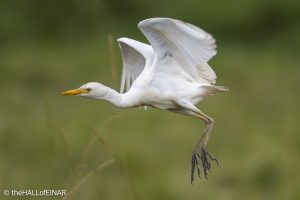 Elephant and Egret This is a Cattle Egret Someone needs to tell it that. Because this is an Elephant. read more
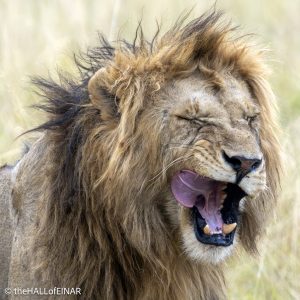 A Lion’s yawn shows its lingual frenulum This male Lion is having a bit of a yawn. I adore the wrinkles on its nose and its wavy,… read more
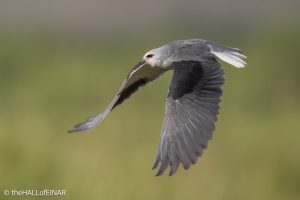 Black-Shouldered Kite There's a Black-Shouldered Kite, Elanus caeruleus, at the top of the bush. It's very far away, but we are gradually… read more