Why do so many fungi grow in churchyards?
Churchyards are often great places for finding fungi. Why? I suspect it’s got to do with their relative protection from pesticides, herbicides and fungicides and avoidance of artificial fertilisers.
Fungi take a long time to grow in grassland and woodland. They need to establish themselves by growing microscopically thin tubes, called hyphae, through the organic matter in the soil. Many can only live in association with particular plants and trees, leading a microscopically entwined life. Spraying chemicals over them disrupts many of their natural processes.
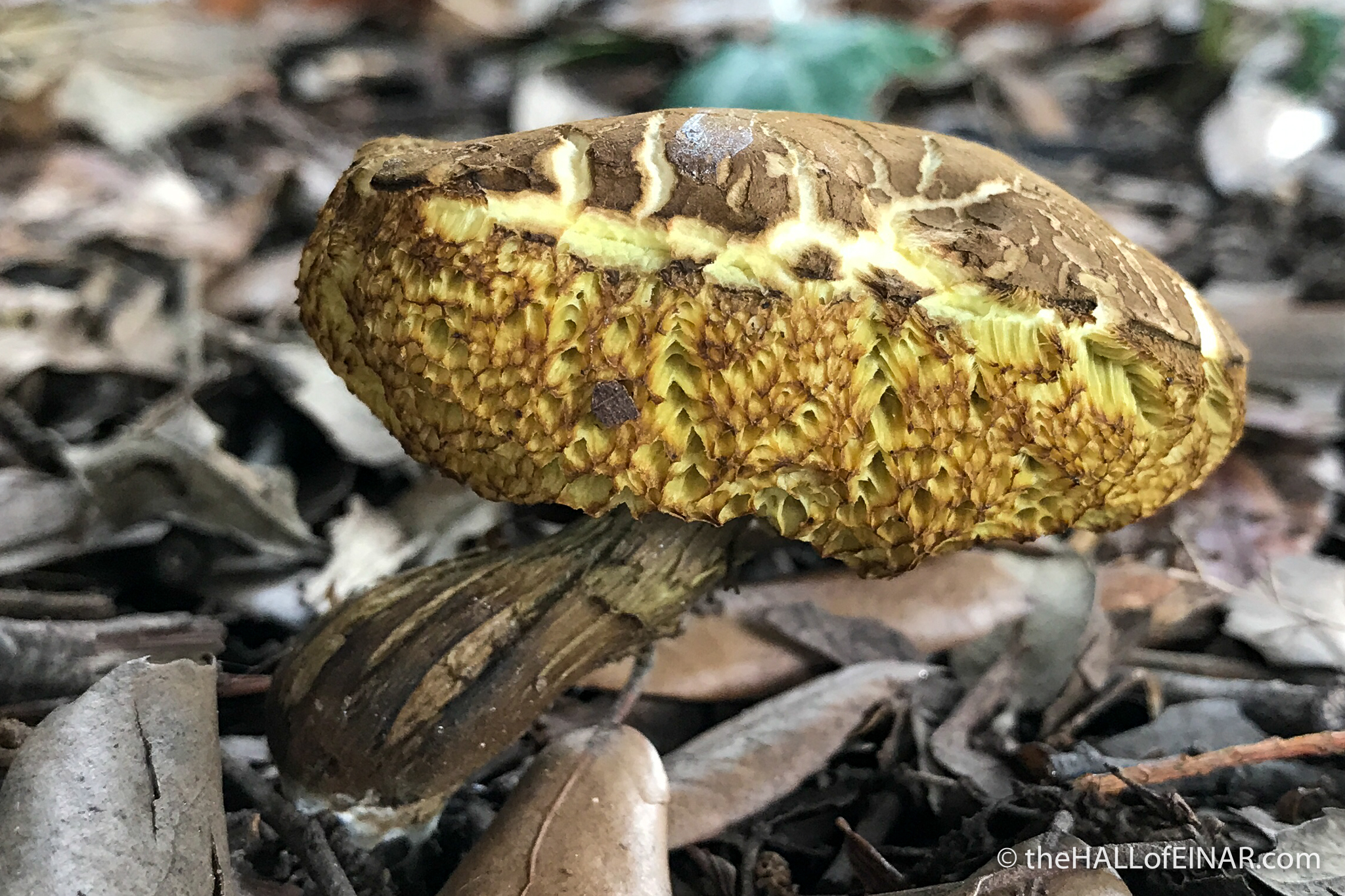
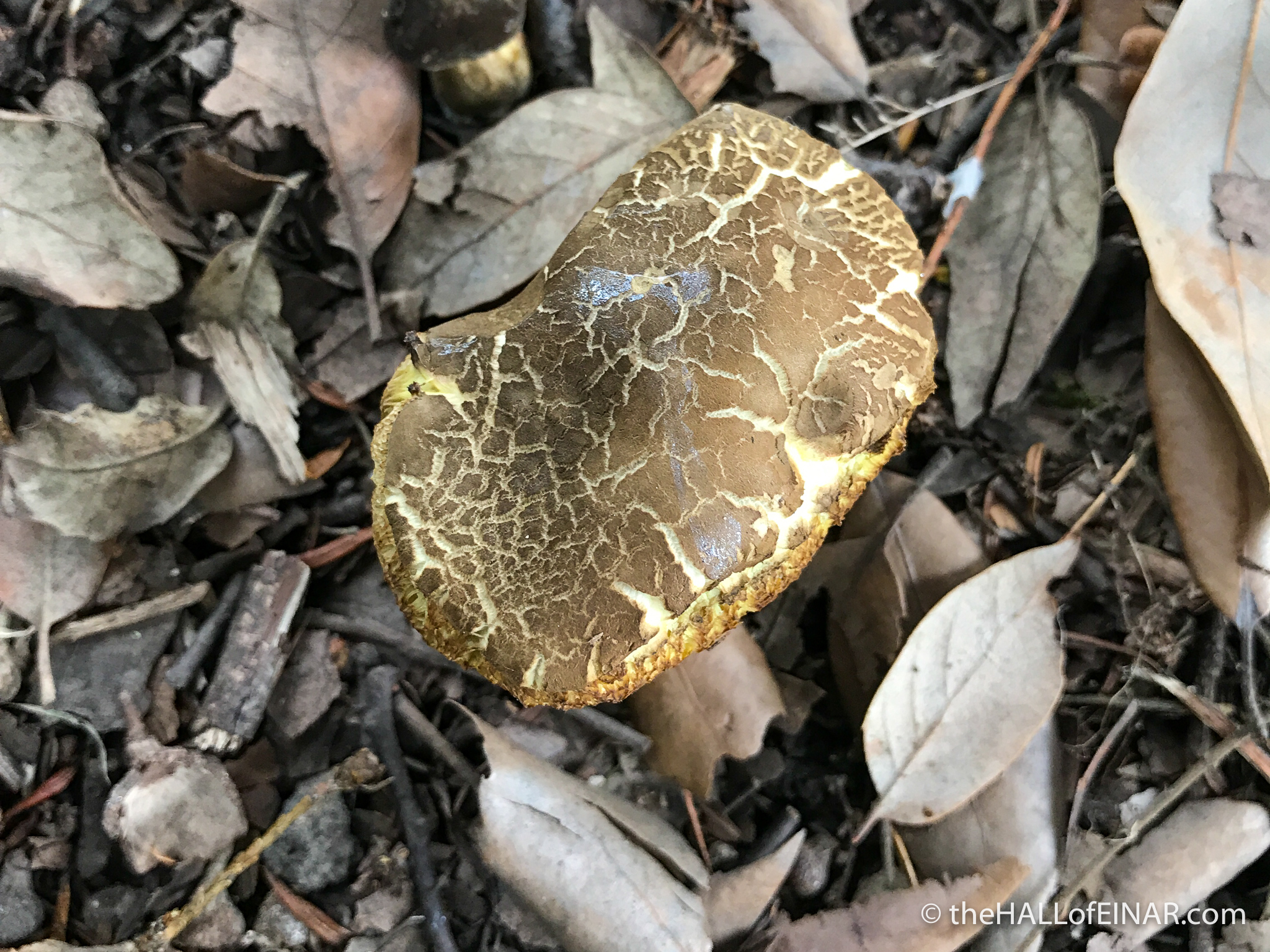
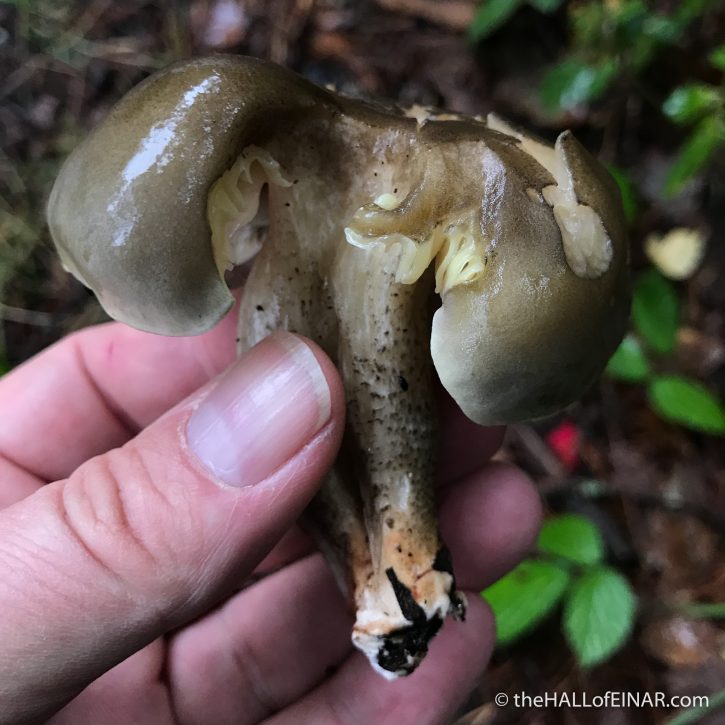
In the churchyard in Devon outside my house there are new species fruiting every week. Here’s Boletus porosporus, the Sepia Bolete, a fungus of deciduous woodland, favouring oak, hornbeam and beech:
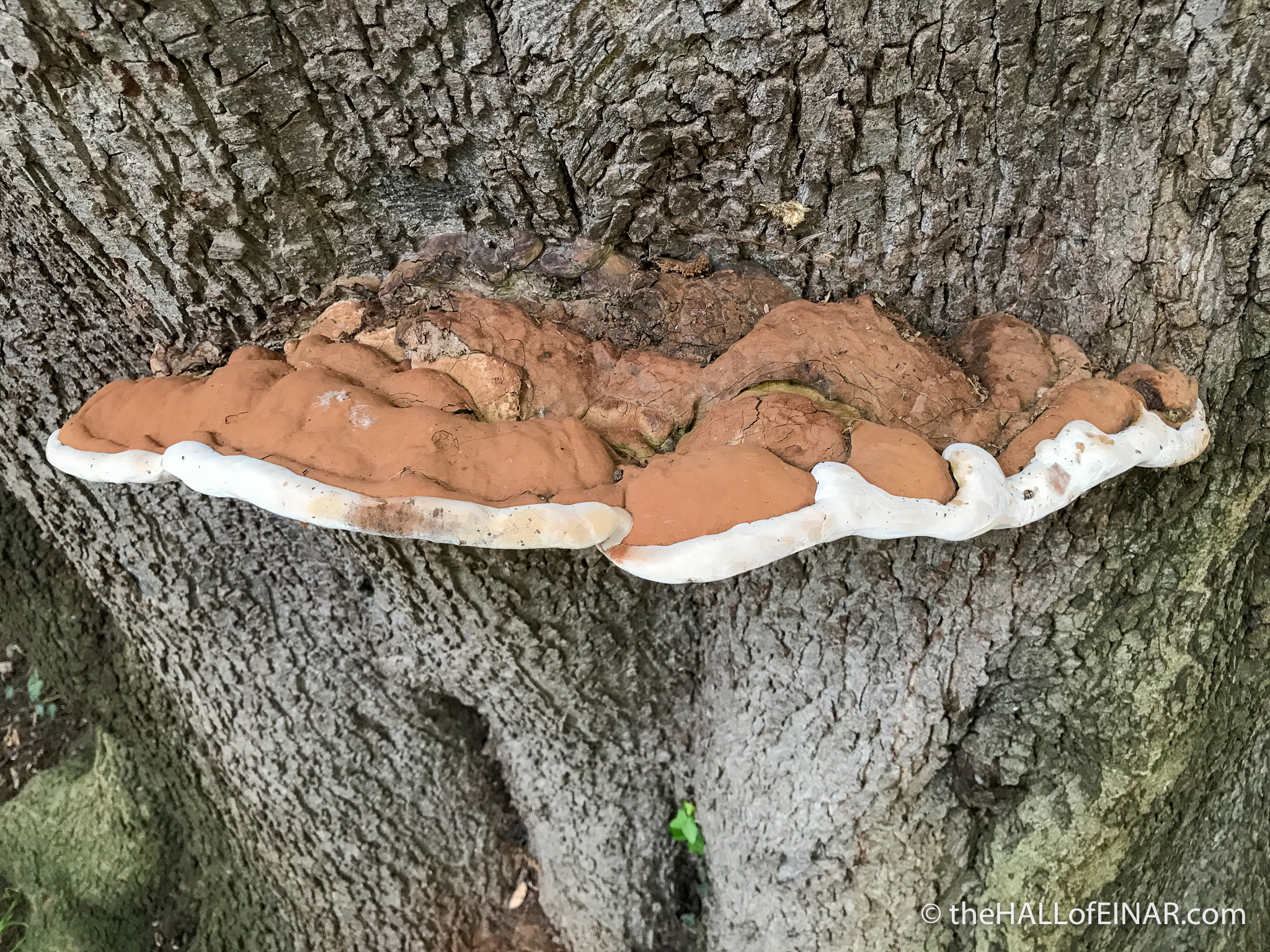
There’s Ganoderma resinaceum, a massive bracket fungus on one of the impressive evergreen oaks which shelters the Boletes. It’s a rare fungus in the UK.
There’s a parasol mushroom, Macrolepiota konradii, here too, with fabulous patterns on its cap.

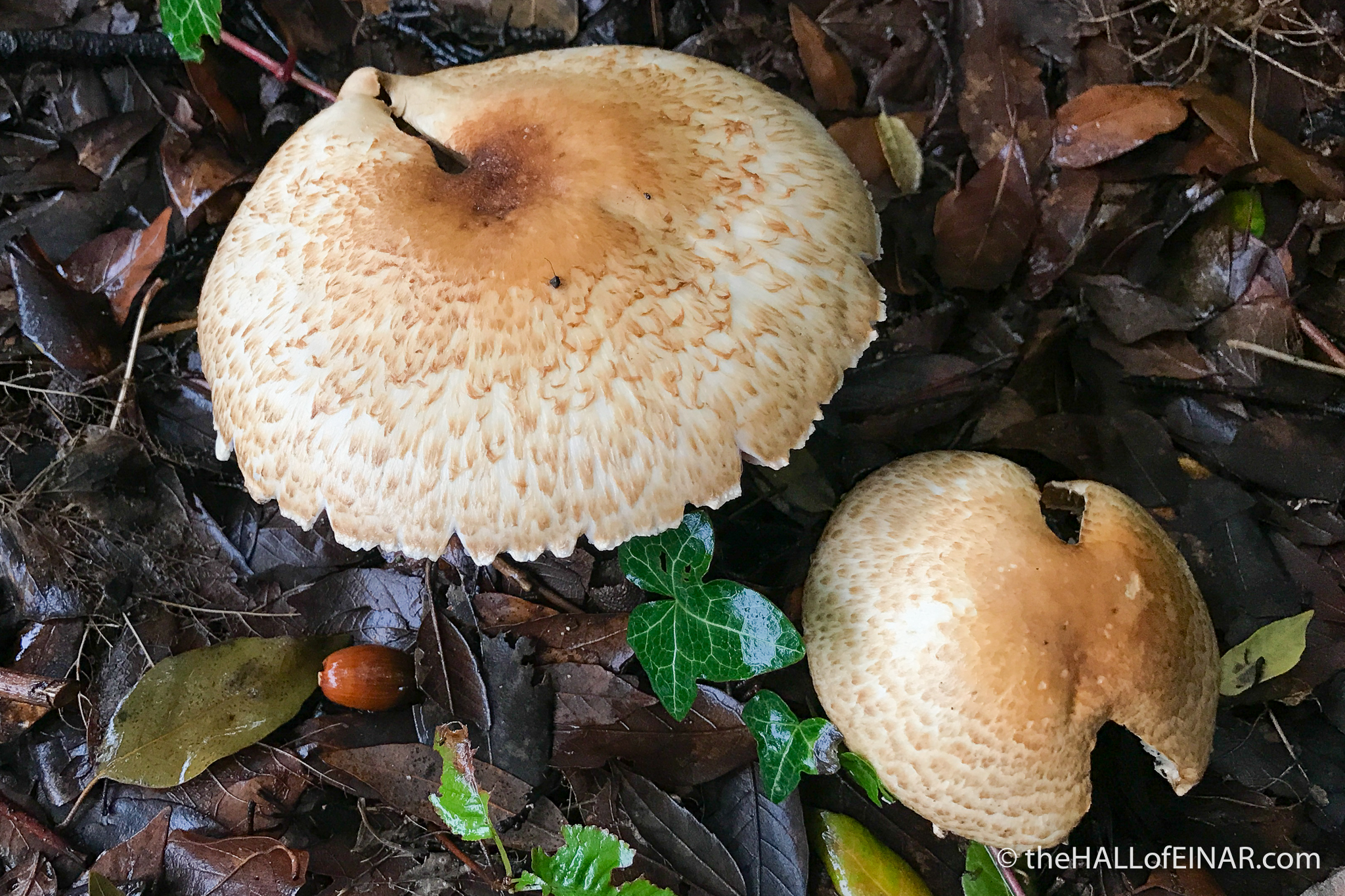
I can see some large caps of fungi growing under the trees. They have salmon-pink gills and heavily patterned tops. They are Agaricus subperonatus. They are described as ‘uncommon’ and ‘an infrequent find’.:
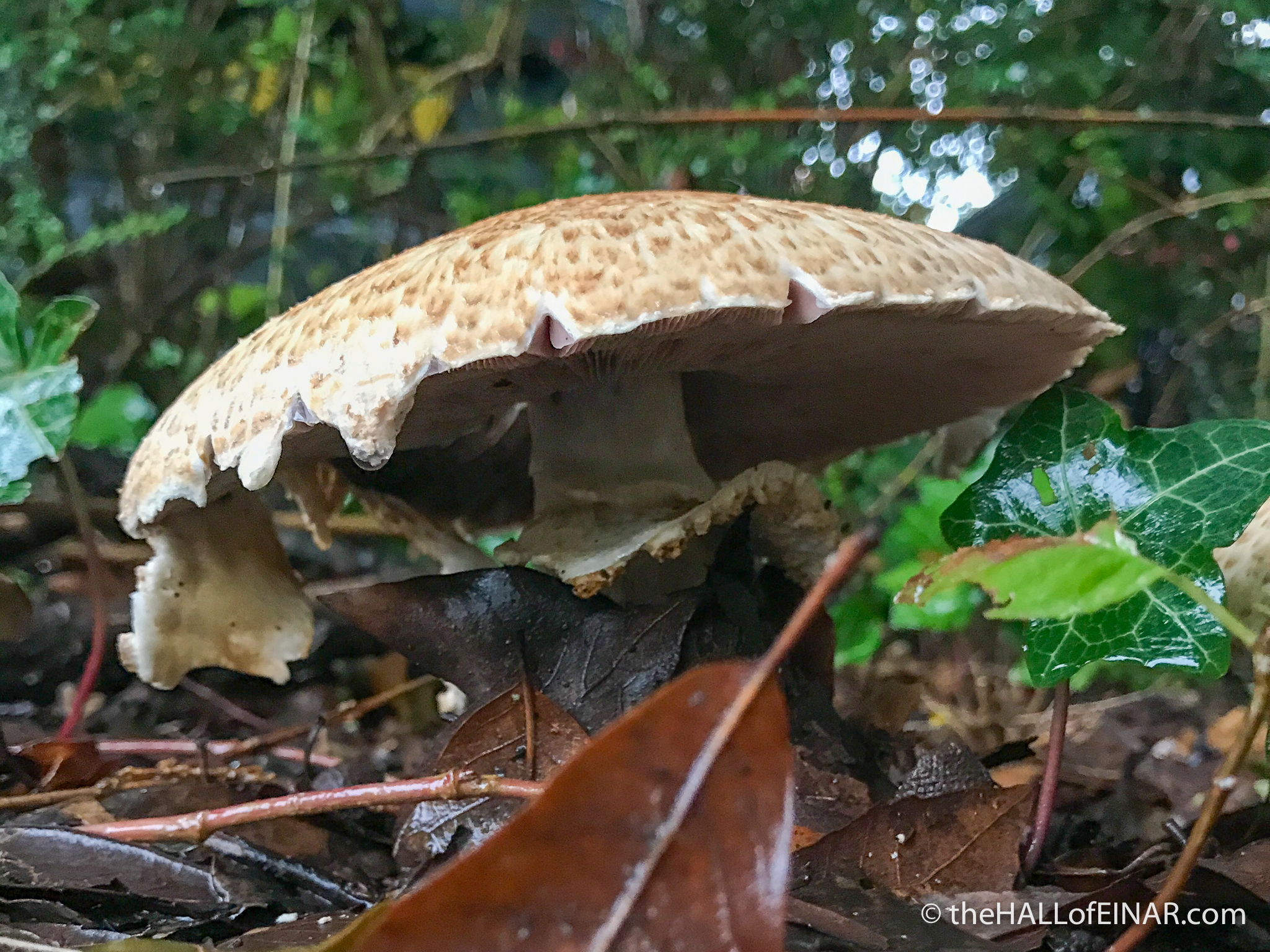
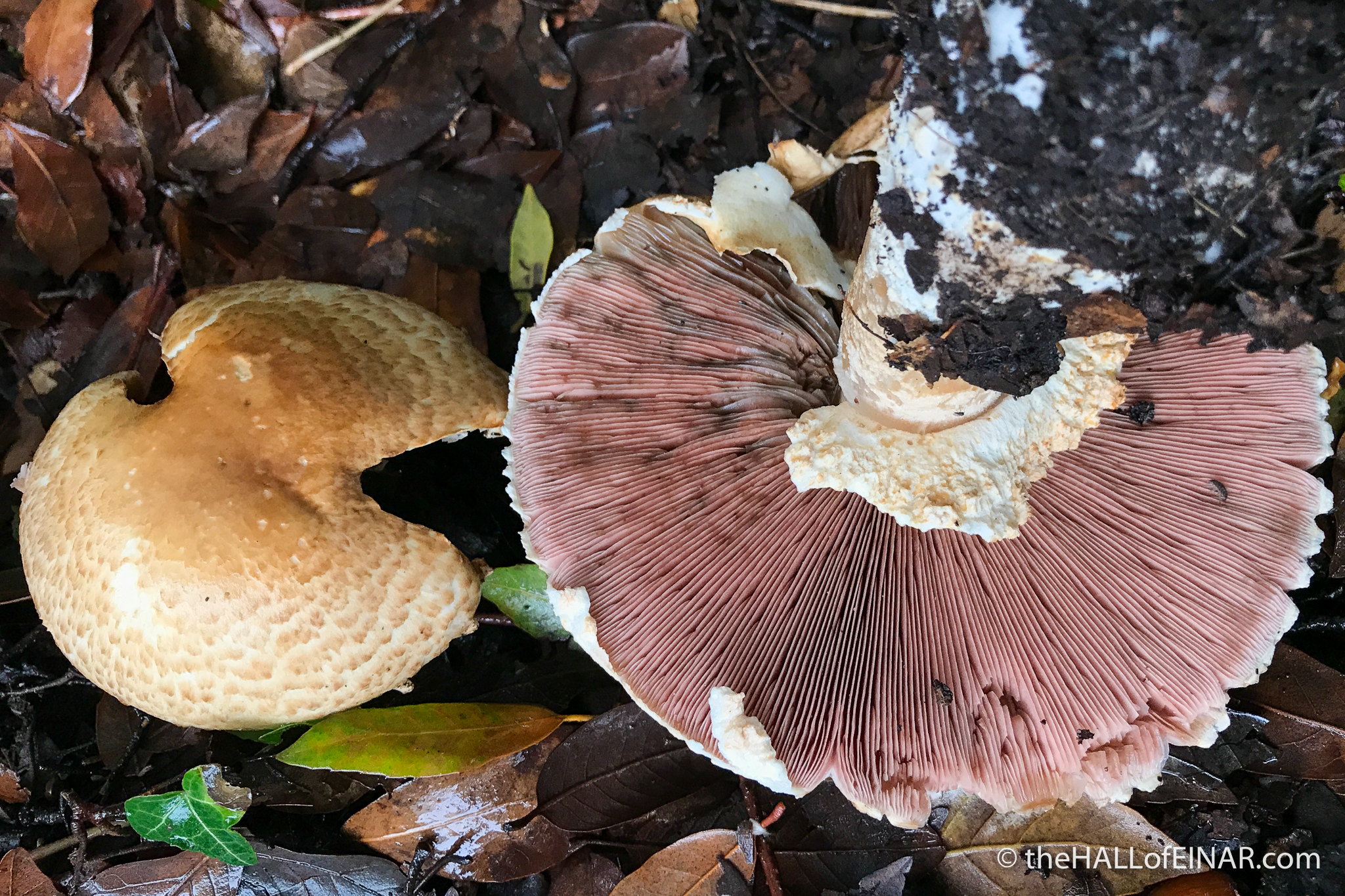
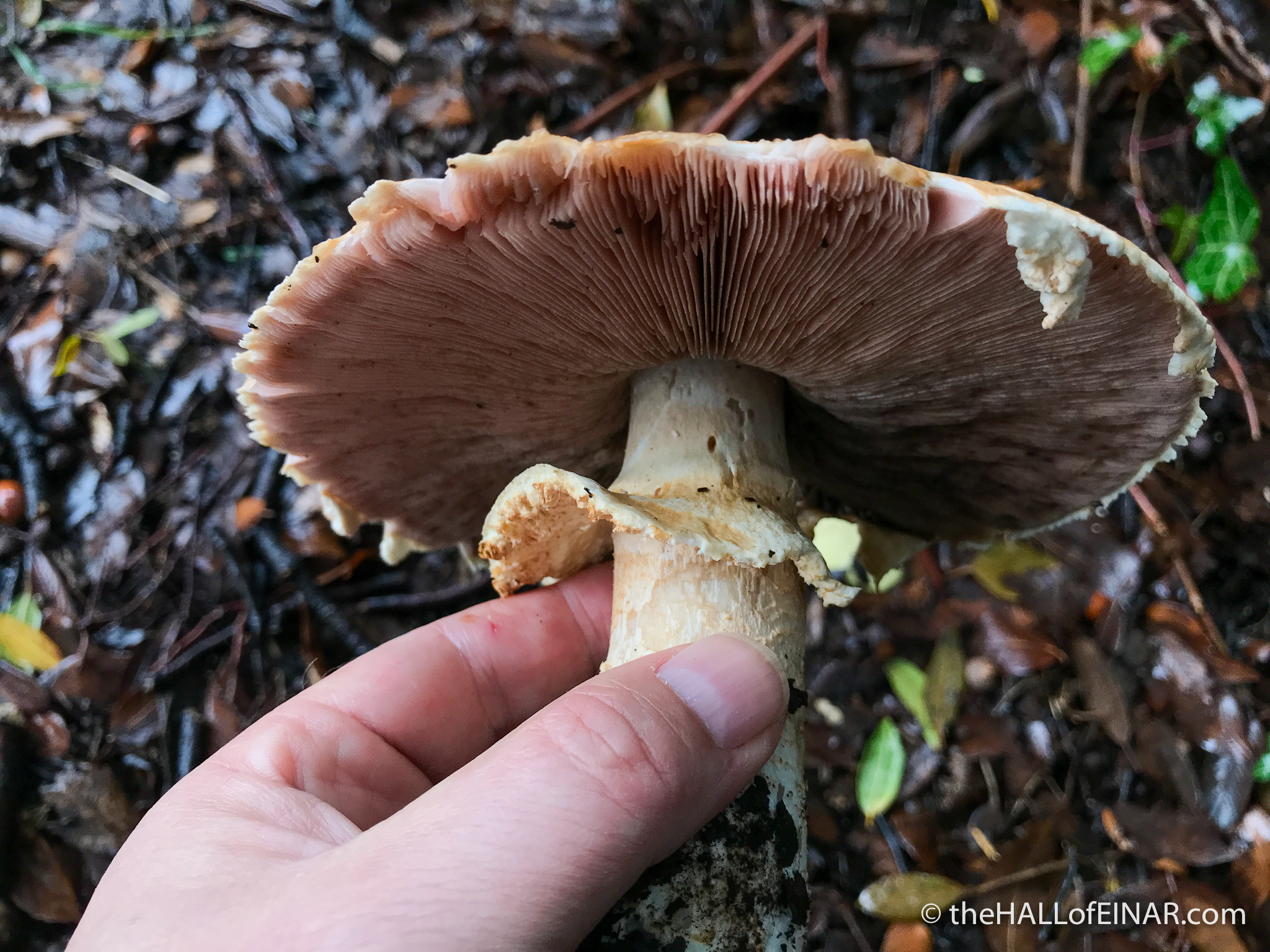
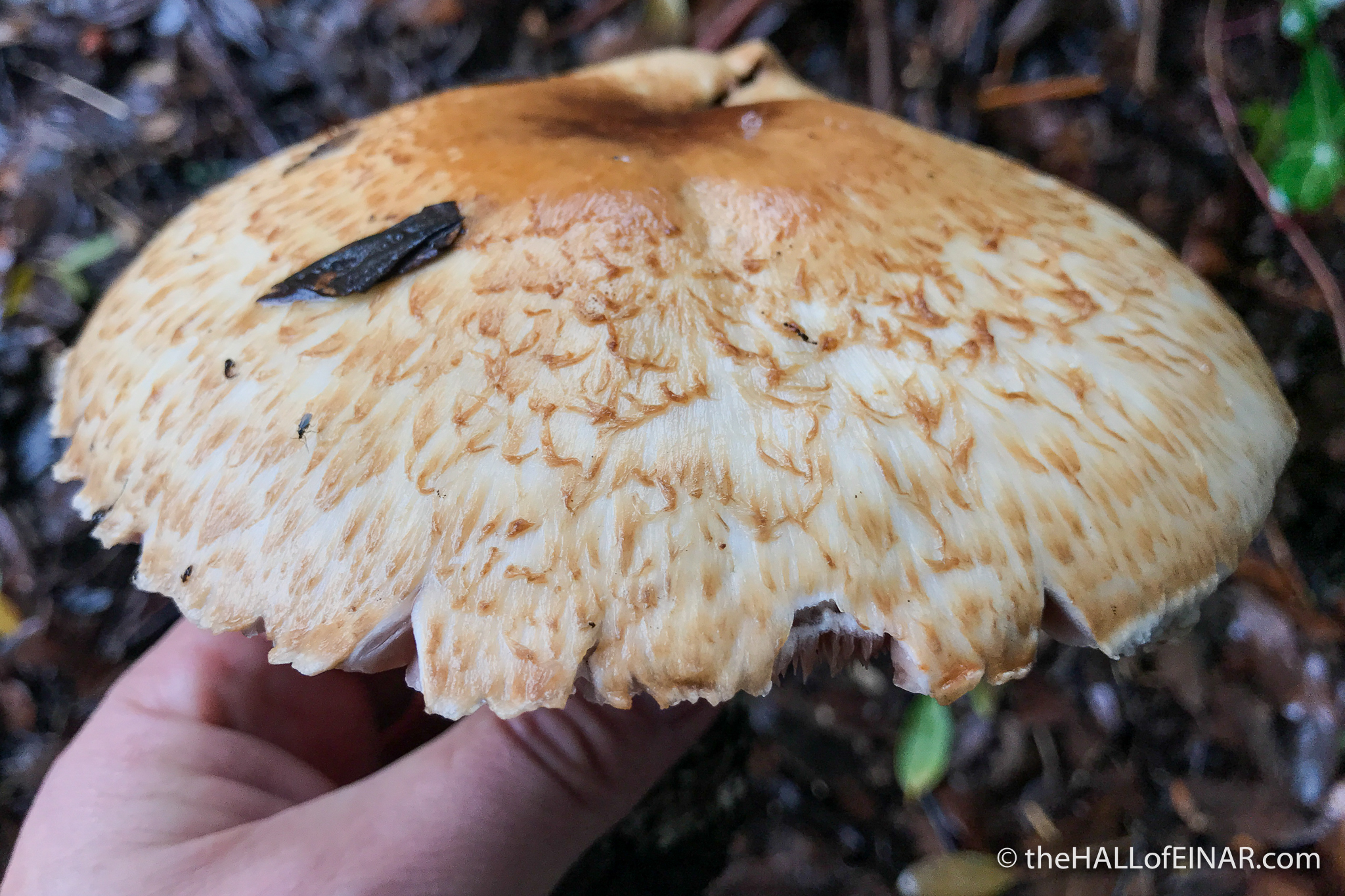
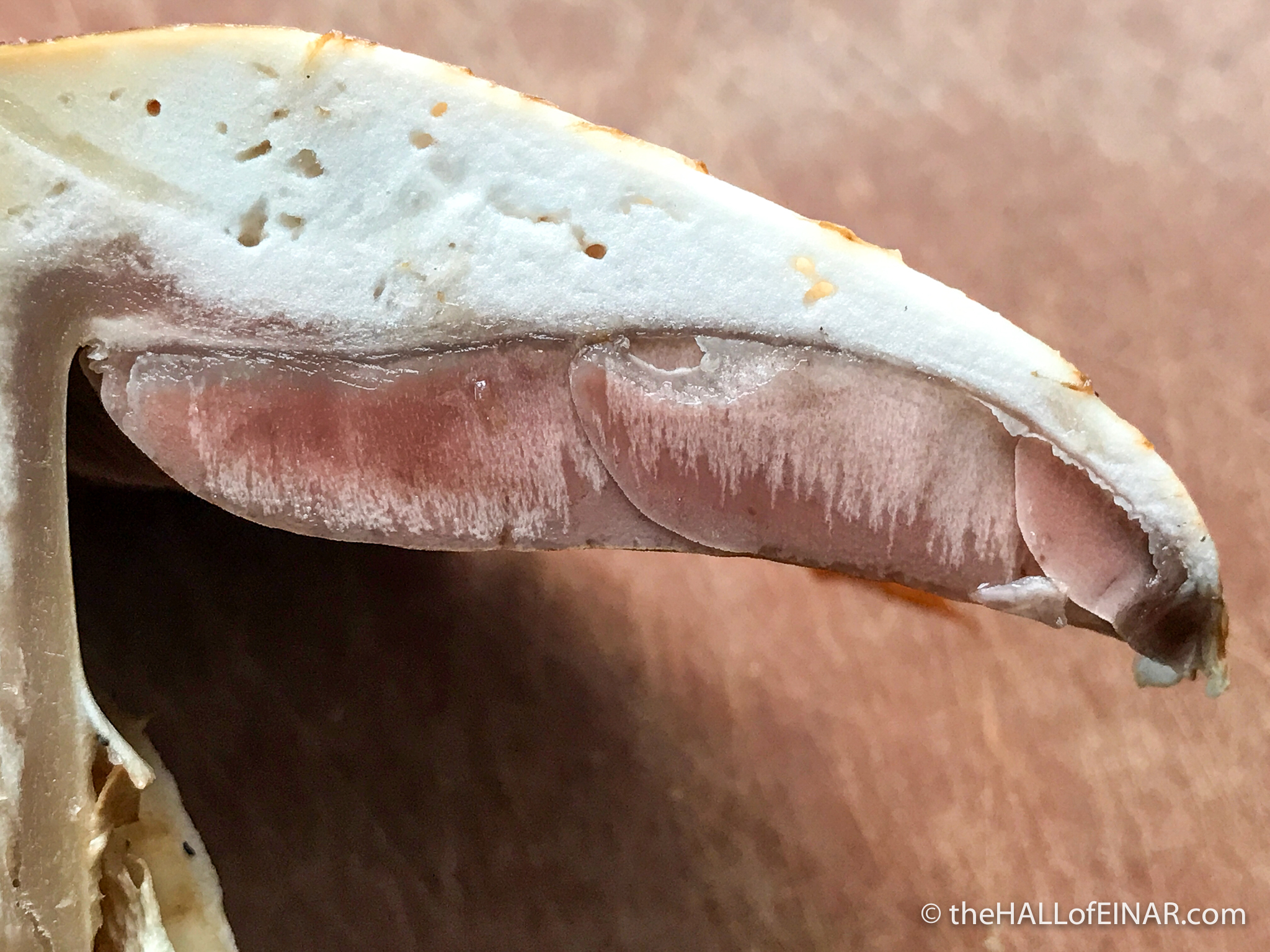
I think they are beautiful. So do the maggots of fungus gnats.
There’s an impressive fairy ring of mushrooms in the far corner of the churchyard. They are Clitocybe gibba, the Common Funnel:
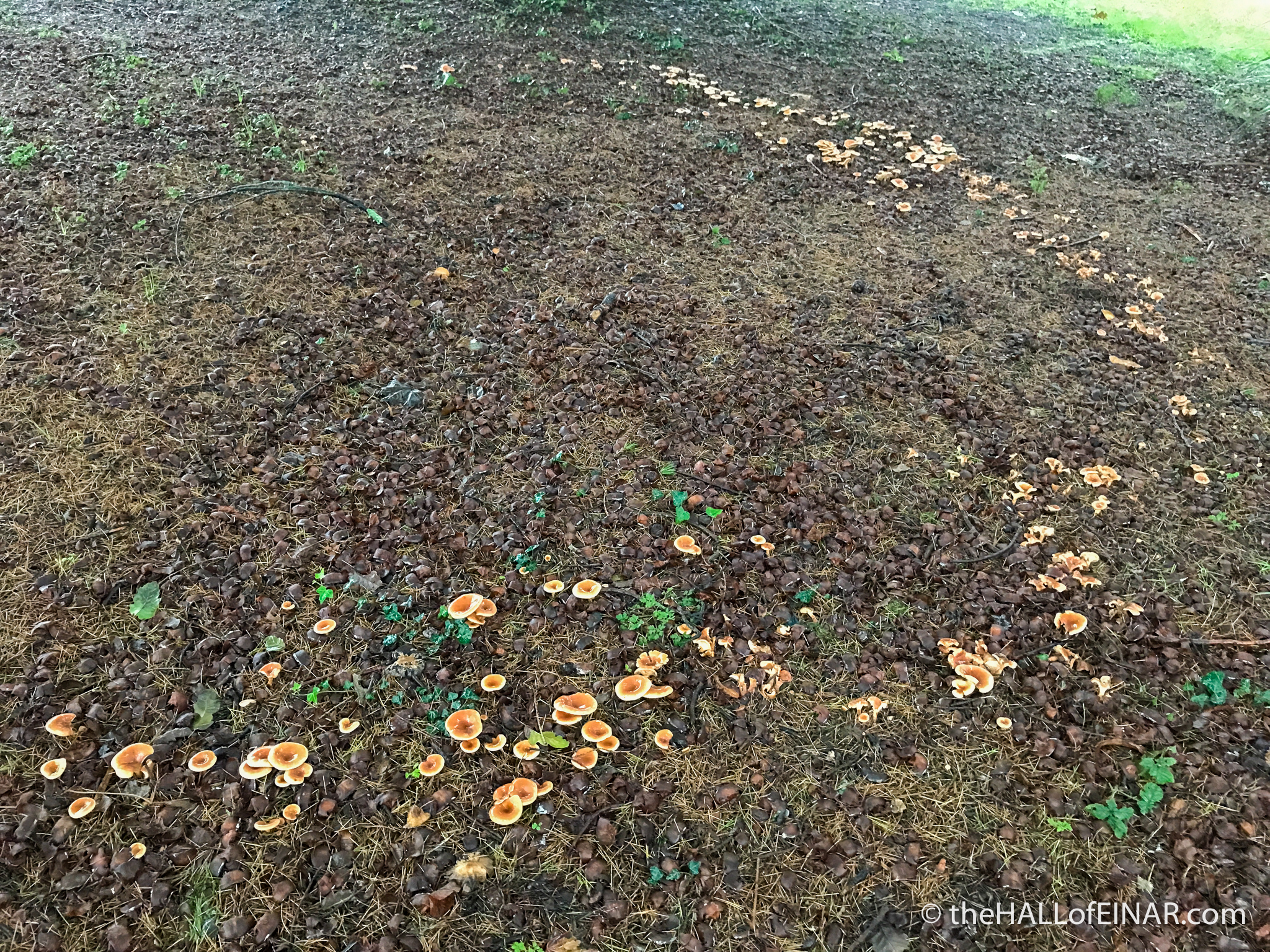
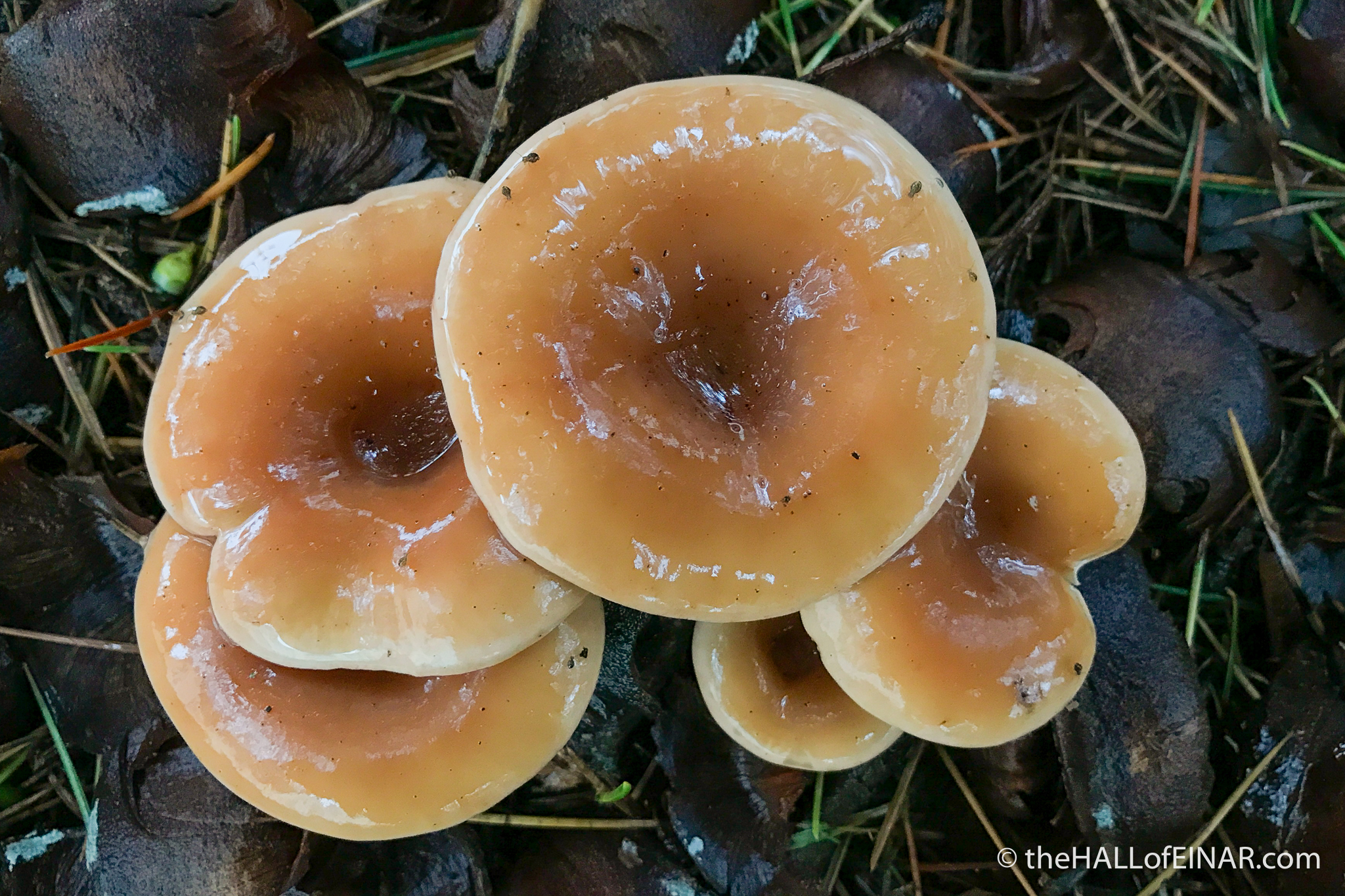

I love the way they adapt to the presence of other fruiting bodies by rippling their rolled rims.
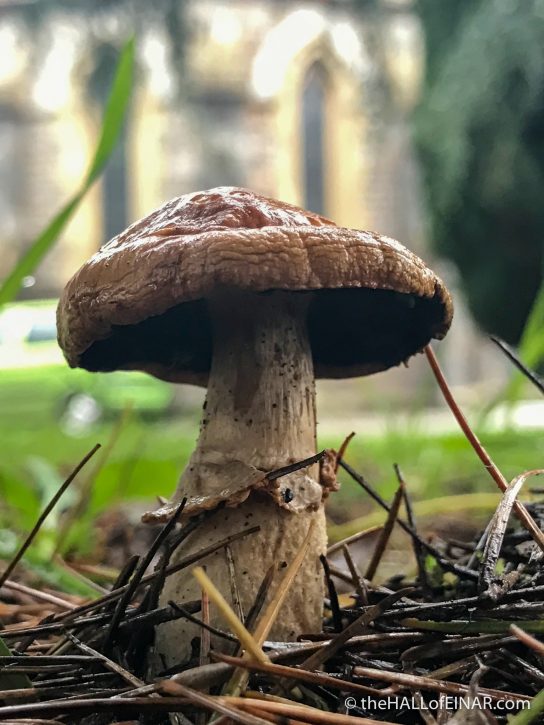
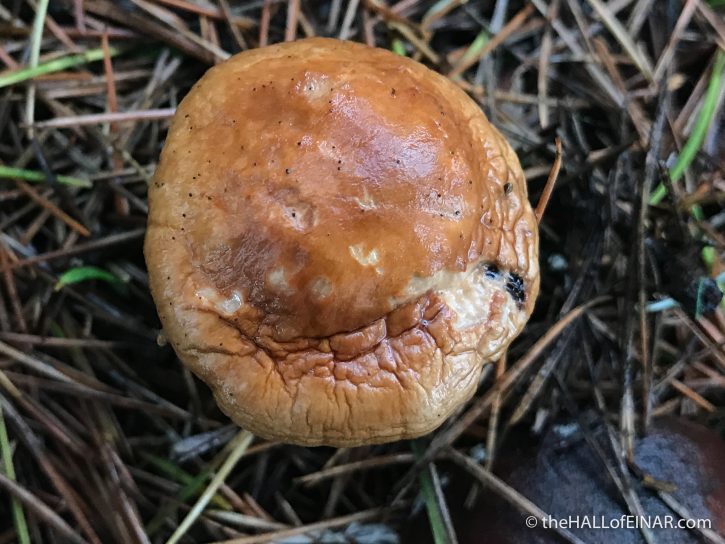
There are also some Cortinarius species here. I haven’t identified this one to species level. It’s looking a little dried and dishevelled.
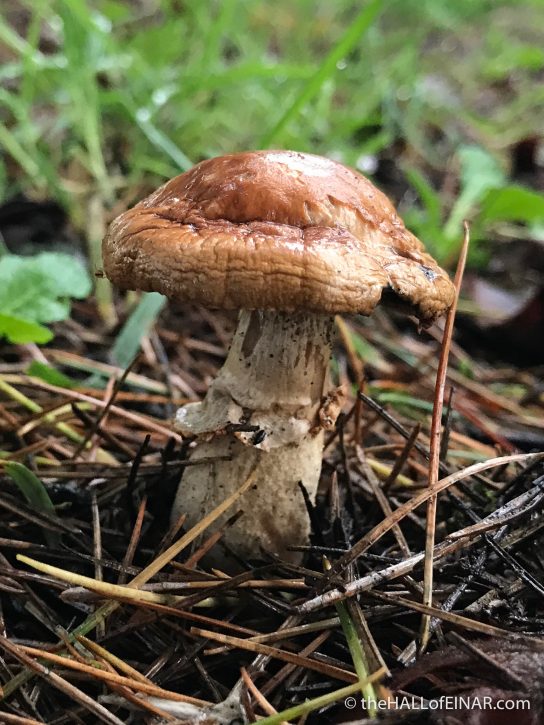
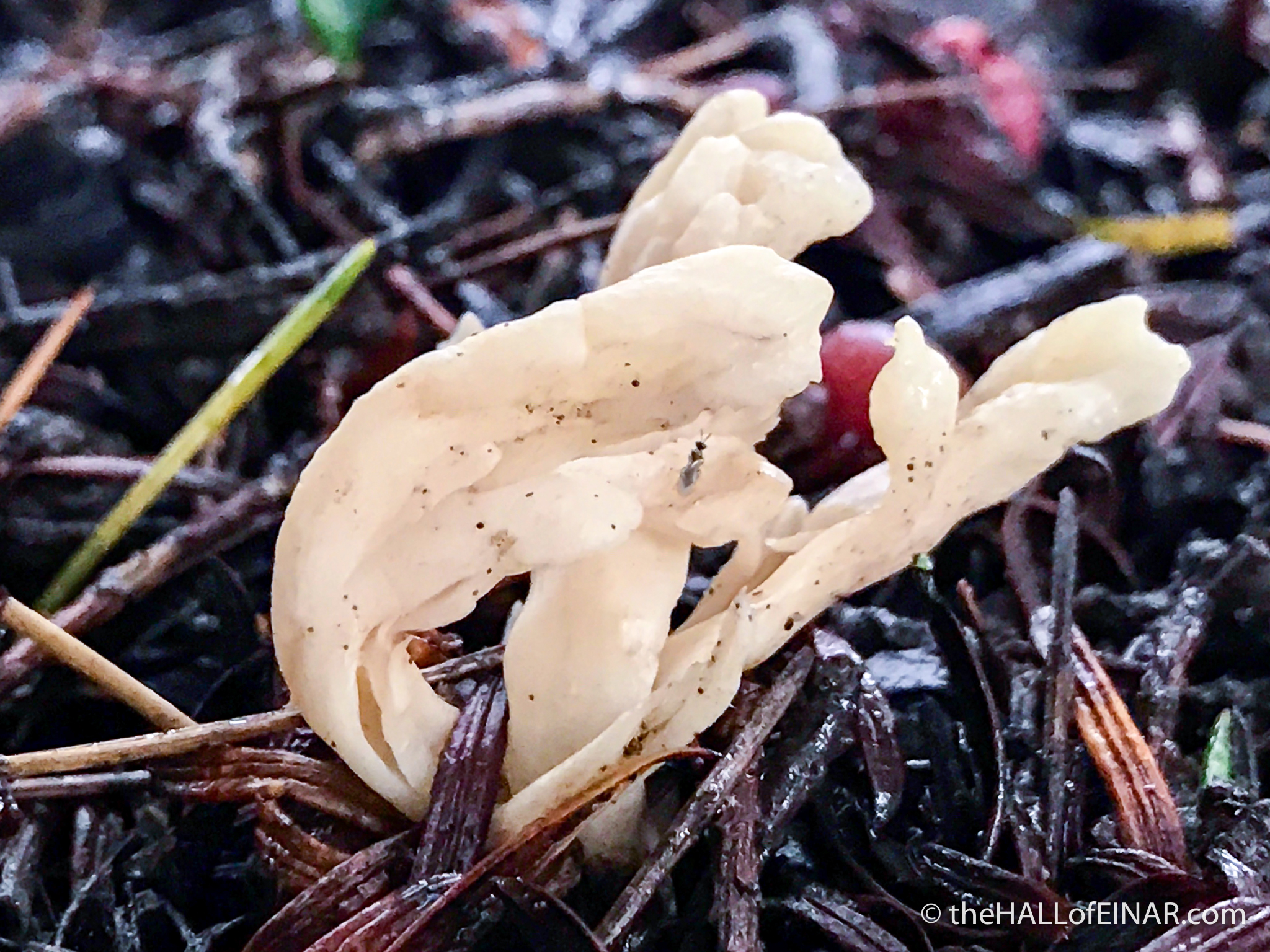
There’s a Wrinkled Club fungus here amongst the pine needles. It’s Clavulina rugosa.
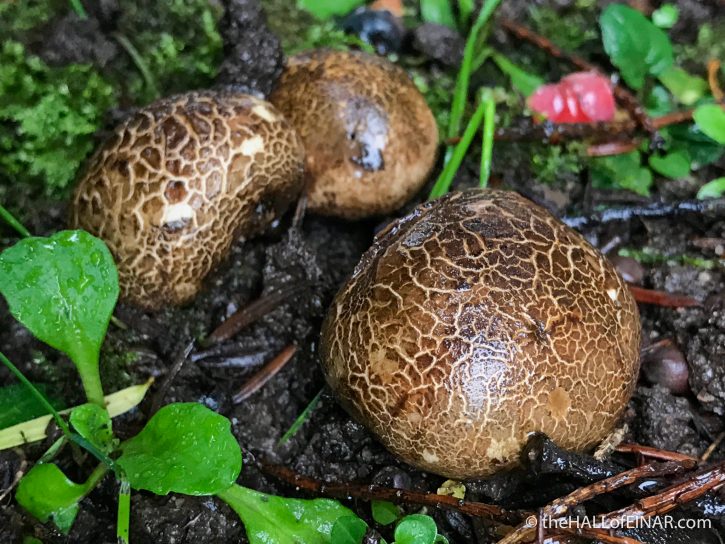
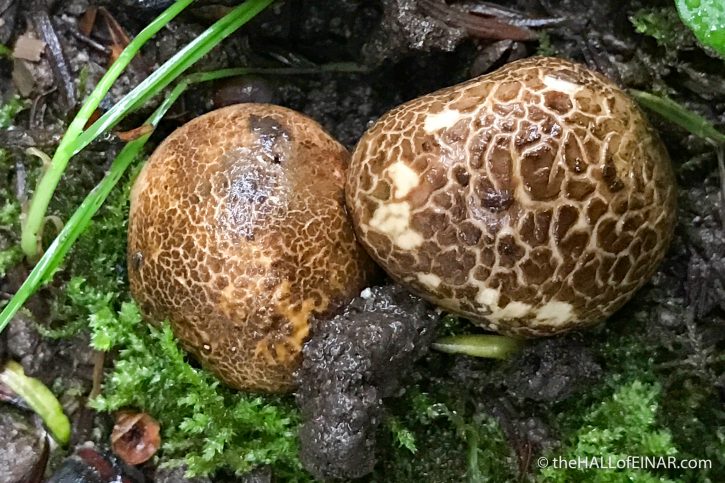
There are also a few unusual earthballs here. They are not the usual Scleroderma citrinum, but Scleroderma cepa instead. The cracking on them is beautiful.
There’s a lovely example of Tricholoma saponaceum, the Soapy Knight, which is very variable, but always smells of soap. This one is no exception.
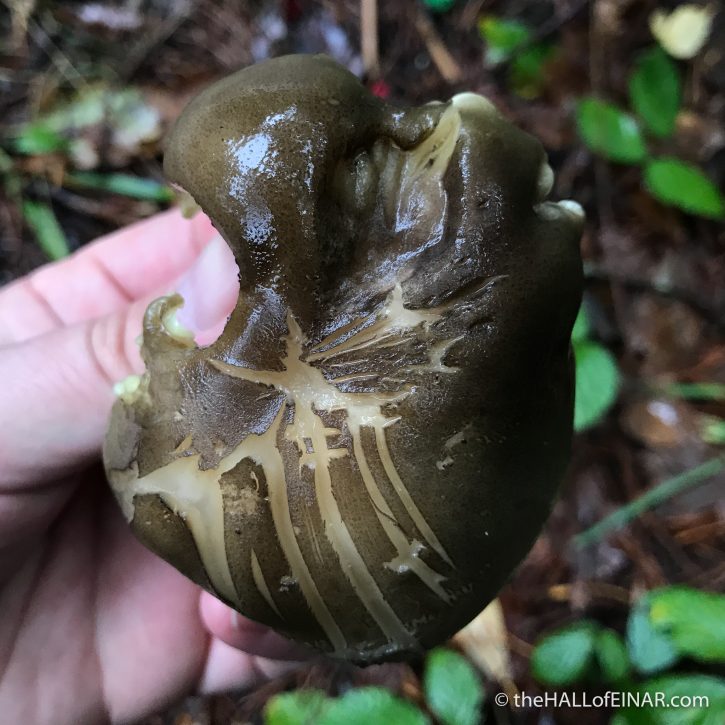
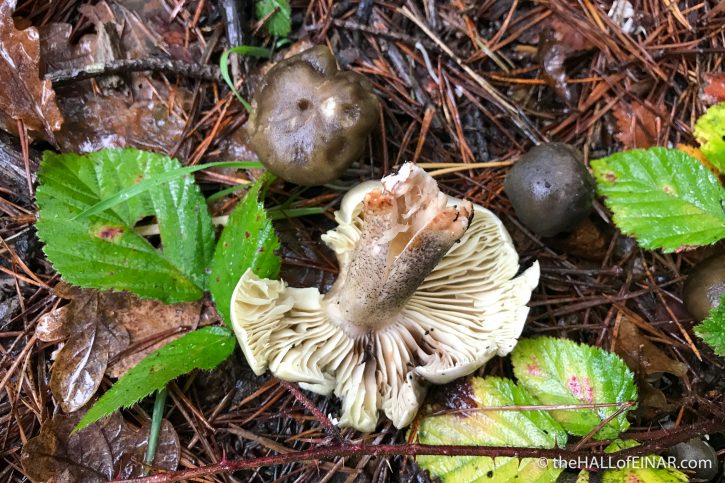
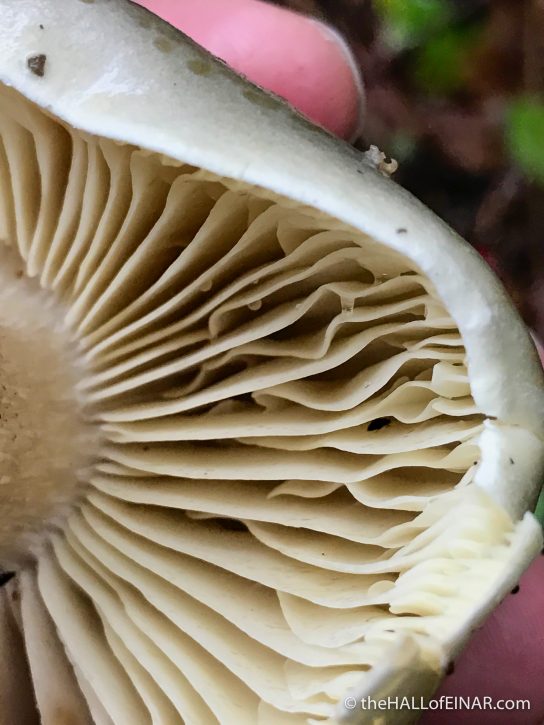
Okay, yes, I admit it’s unusual to go around sniffing mushrooms, but it’s an important part of identifying many species.
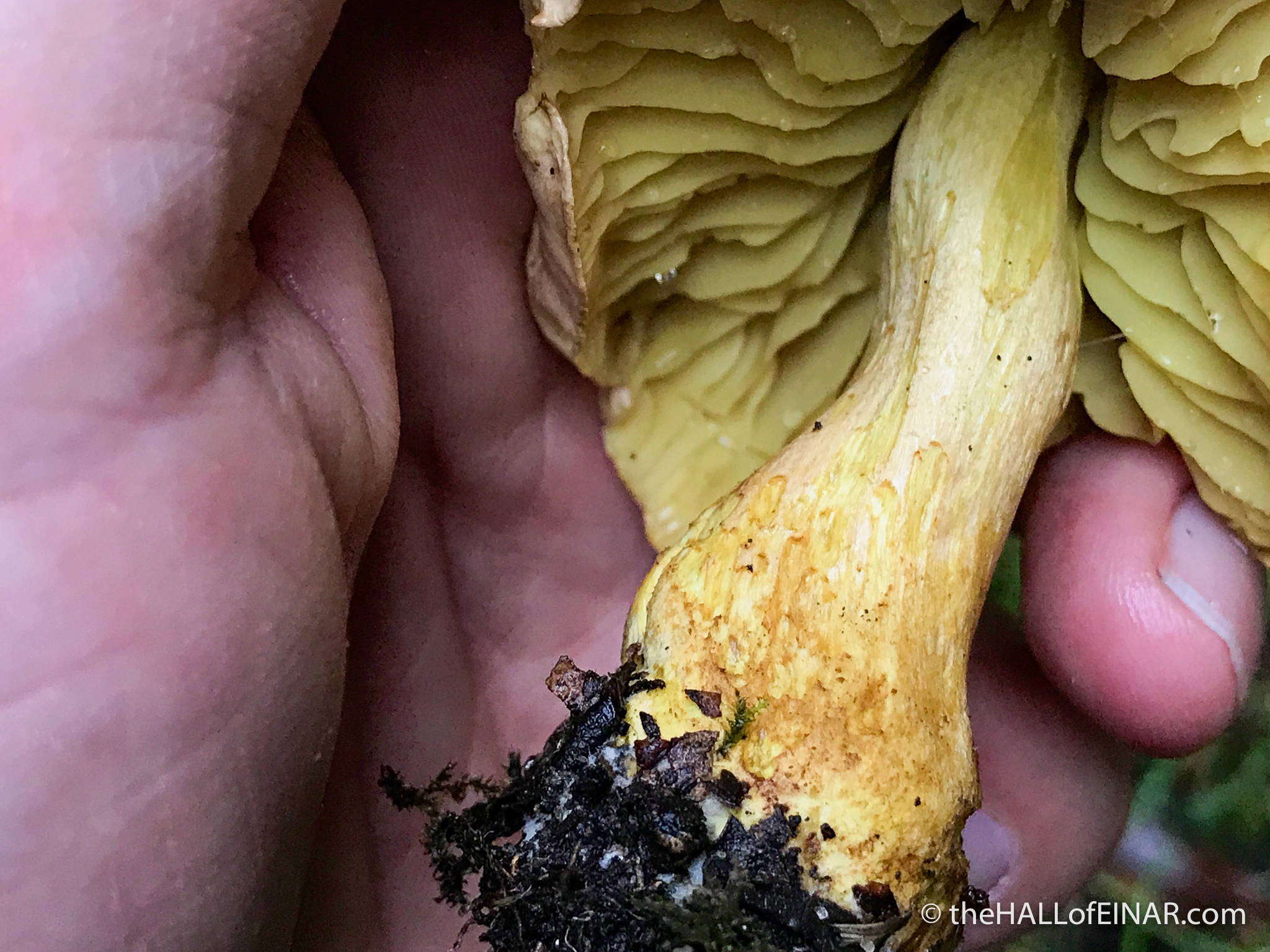
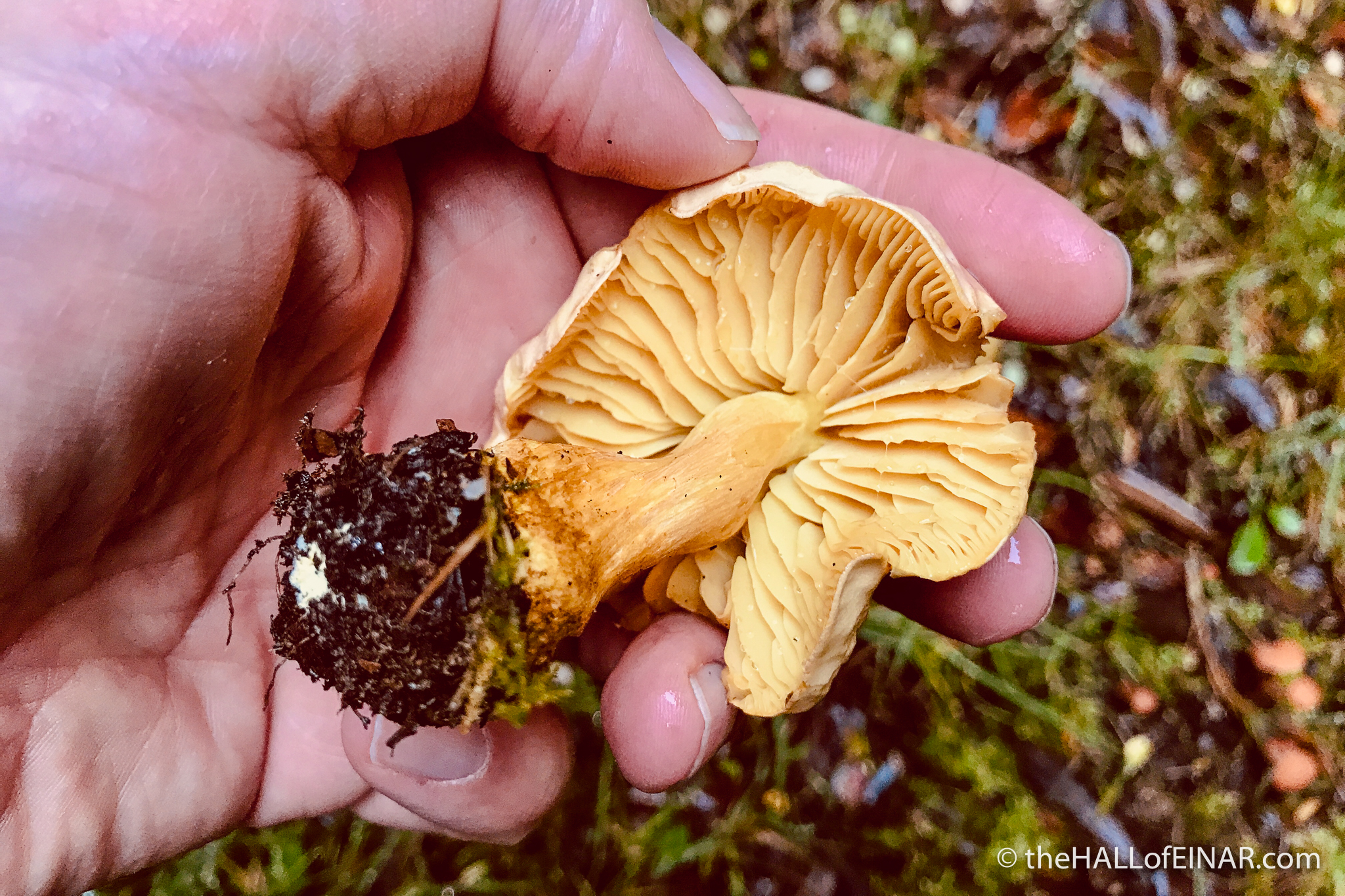
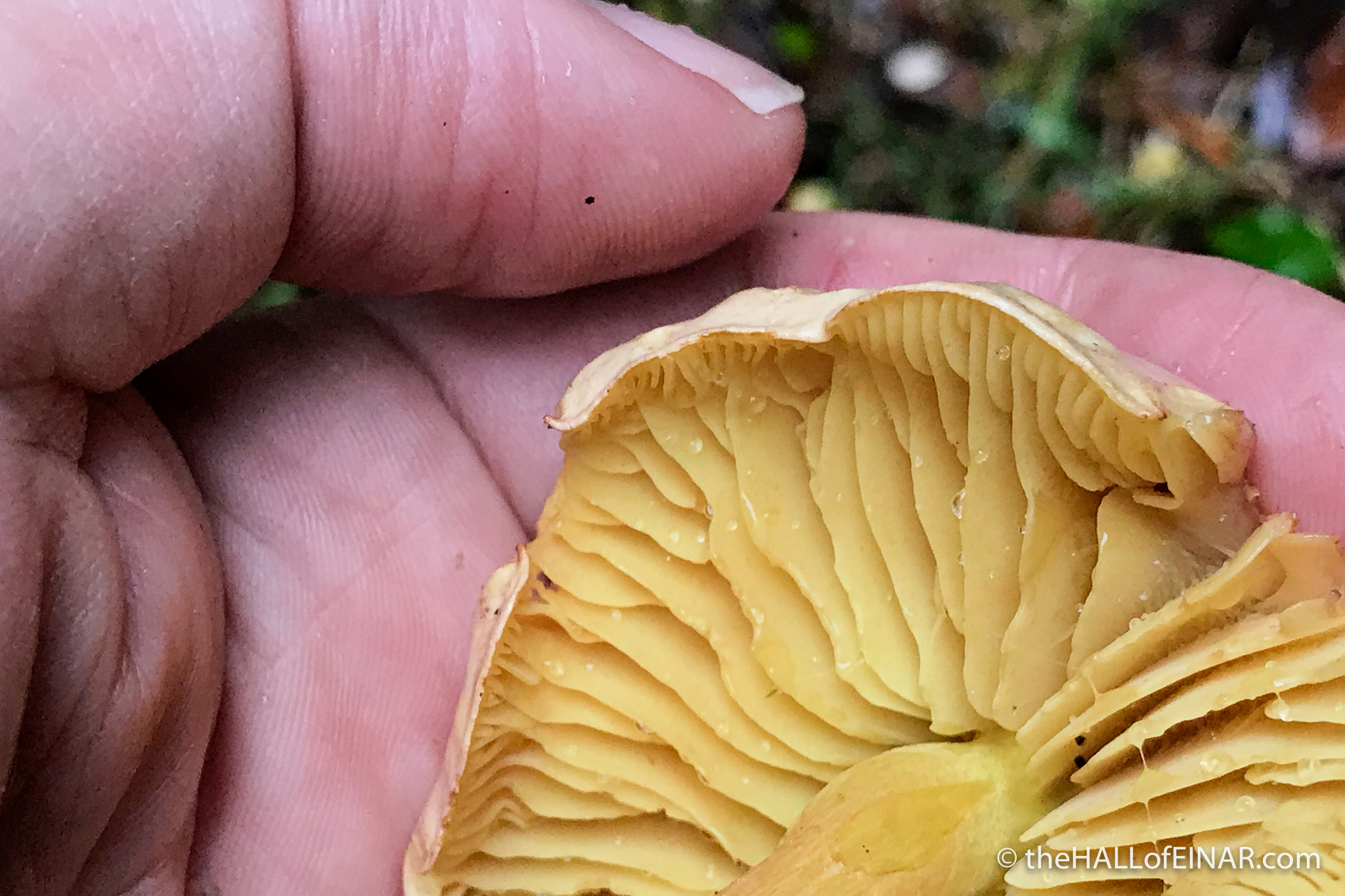
Talking of Knight fungi, the Tricholomas, the final one for today’s doorstep foray is the Sulphur Knight, Tricholoma sulphureum. It has the most extreme smell of what is described as coal gas. As with many of the smells of fungi in guide books, it says much of the period of their discovery. Specific fungi are said to smell of bed bugs or coal gas. How many people know those smells nowadays?

Fewer than sniff mushrooms, I suspect.
More Fungi
 Extinction Advent calendar – Day 8 Extinction Advent Calendar - Day 8. It’s not just animals and plants which are suffering in Britain. Degradation and loss… read more
 The Giant Polypore The Giant Polypore, Meripilus giganteus, is giant and has many pores on its underside. It's also called the Black-Staining Polypore… read more
 Penny Buns It's wet again and my trousers are soaking after lying in a wet field photographing these marvellous Penny Buns, Ceps,… read more
 The Spectacular Rustgill It's that season again. There are dense clusters of Spectacular Rustgills in this woodland. In the light they are a… read more
 Ash downfall Here's a Cramp Ball. There are hundreds of them here. They love dead or dying Ash trees. I've been taking… read more
 St George’s Mushrooms Last week I said we should be getting St George's Mushrooms soon. This week, they arrived. By the side of… read more
 Dacrymyces deliquescens There's a tiny orange fungus on this wet rotting wood. I recognise it from my childhood. It can only be… read more
 Velvet-stemmed Little Flame December is the best time to find Velvet Shank fungus, Flammulina velutipes. It's a species I found as a child:… read more
 You can set your calendar by its appearance Hypholoma fasciculare is a great name for a fungus. read more