The marvellous Green Woodhoopoe
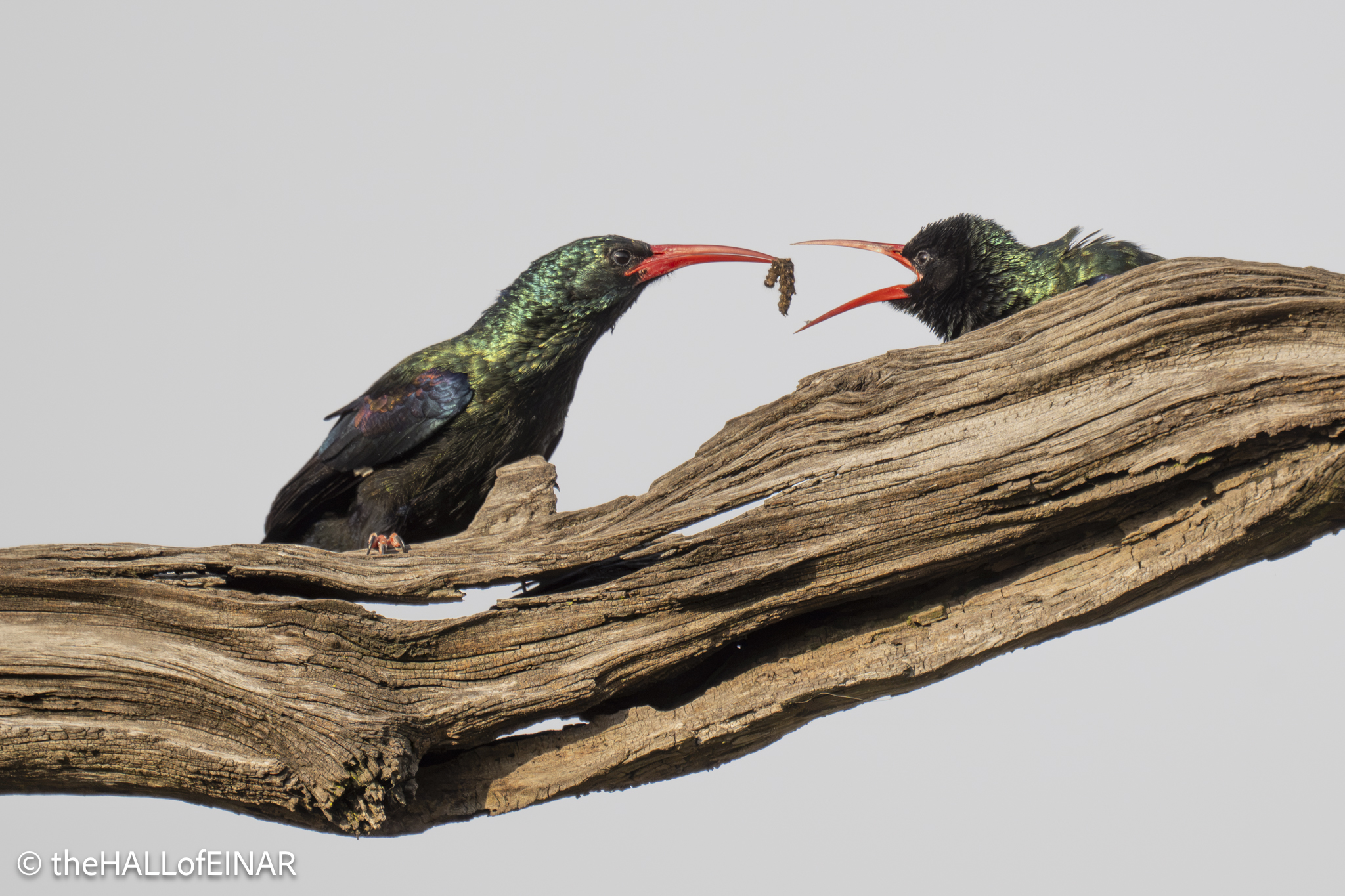
My safari guide Johnson has spotted the nest of a Green Woodhoopoe in a hole in a tree. I love them. We see one fly towards us and land on the tree. It calls and another adult emerges from the nest.
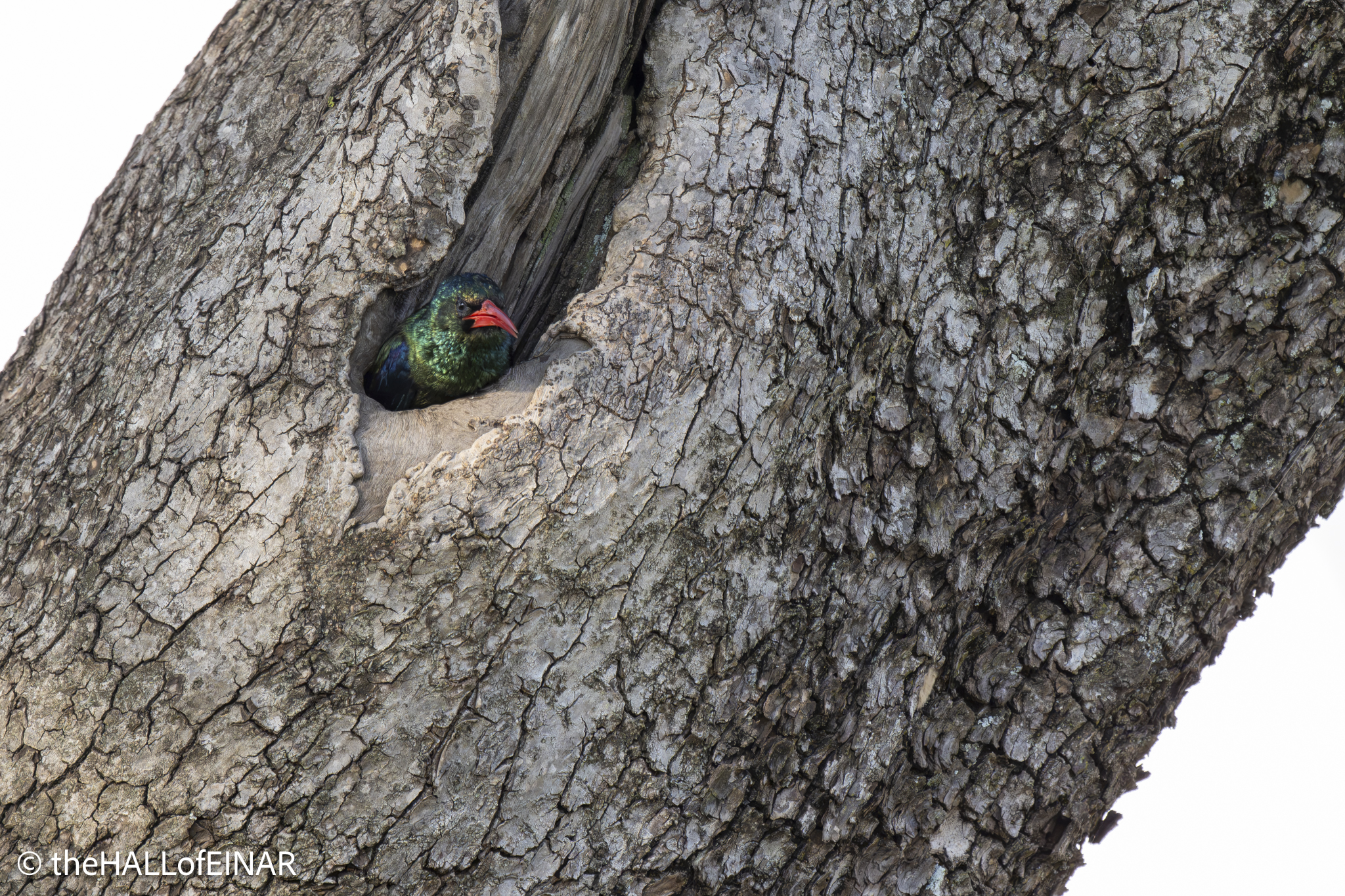
Their iridescent plumage is almost jewel-like. It’s like a fabulous 1920s flapper dress made with glorious sequins.

It’s brought a moth back to the nest to feed the adult on the eggs or chicks.
The iridescent green isn’t their only iridescent colour. There’s blue and a pink-purple colour on their wings and shoulders. That downcurved red bill is spectacular as well. As is the long tail.
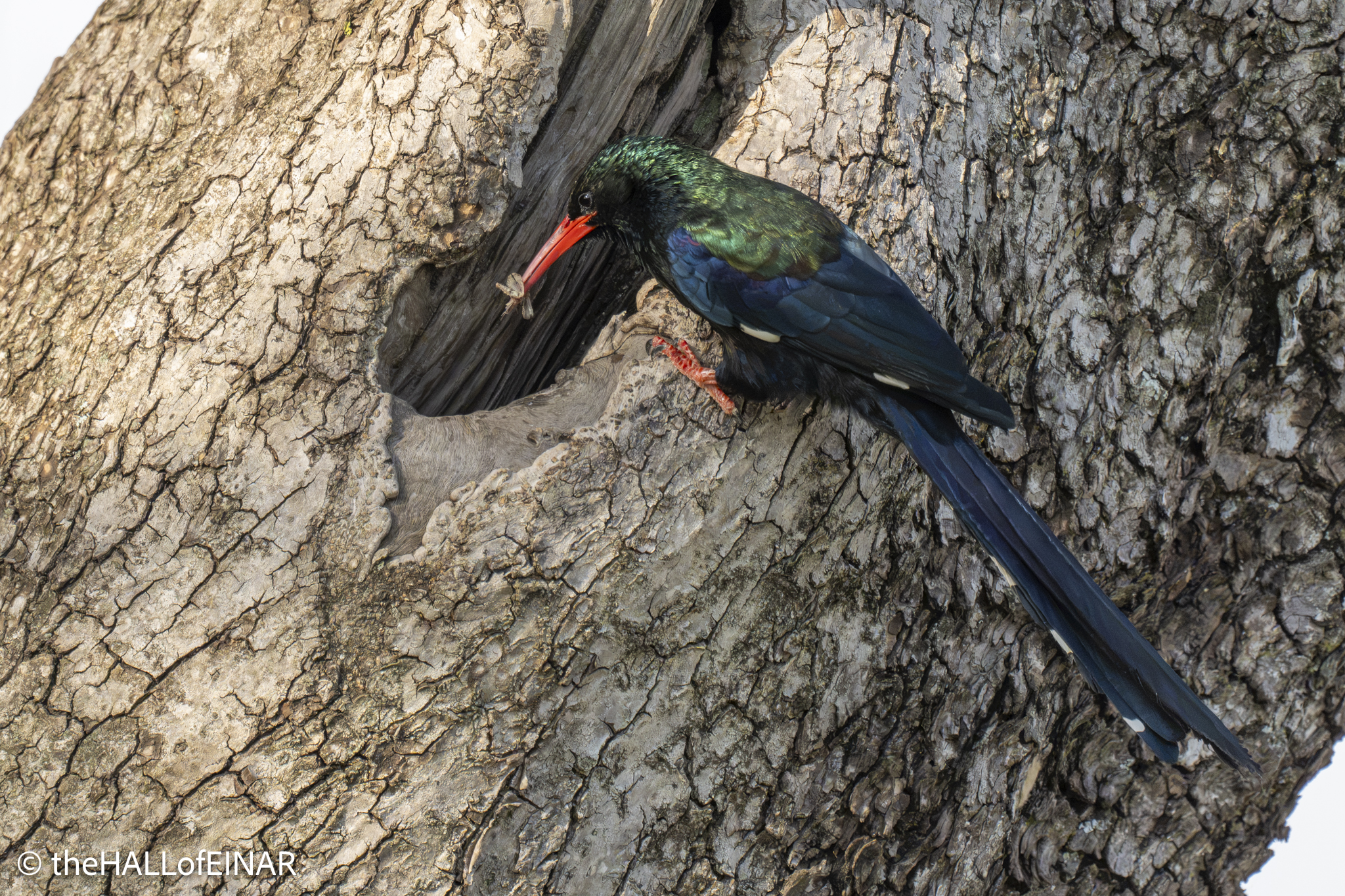
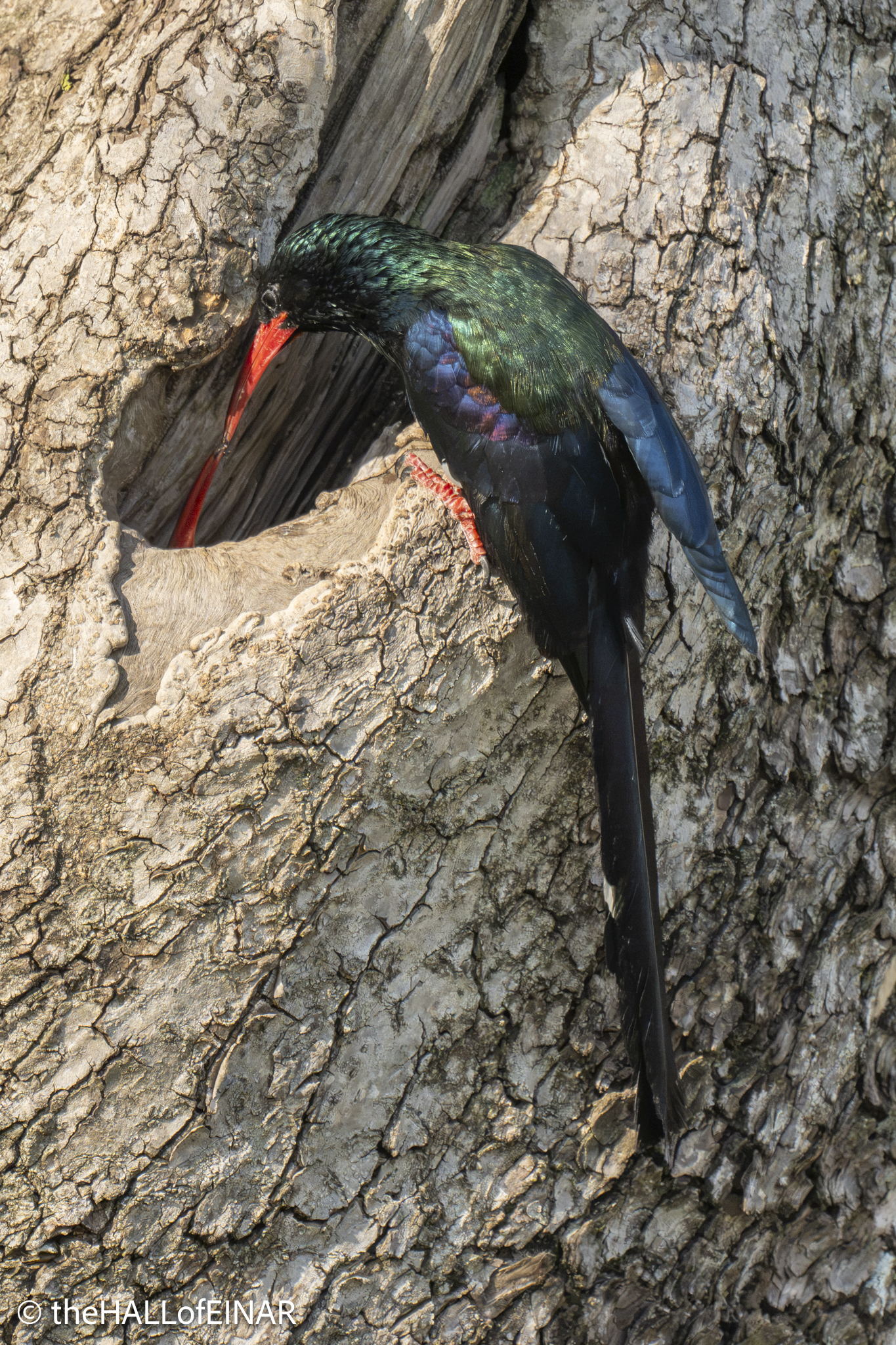
Just when we think we’ve seen the couple, another adult arrives with food.
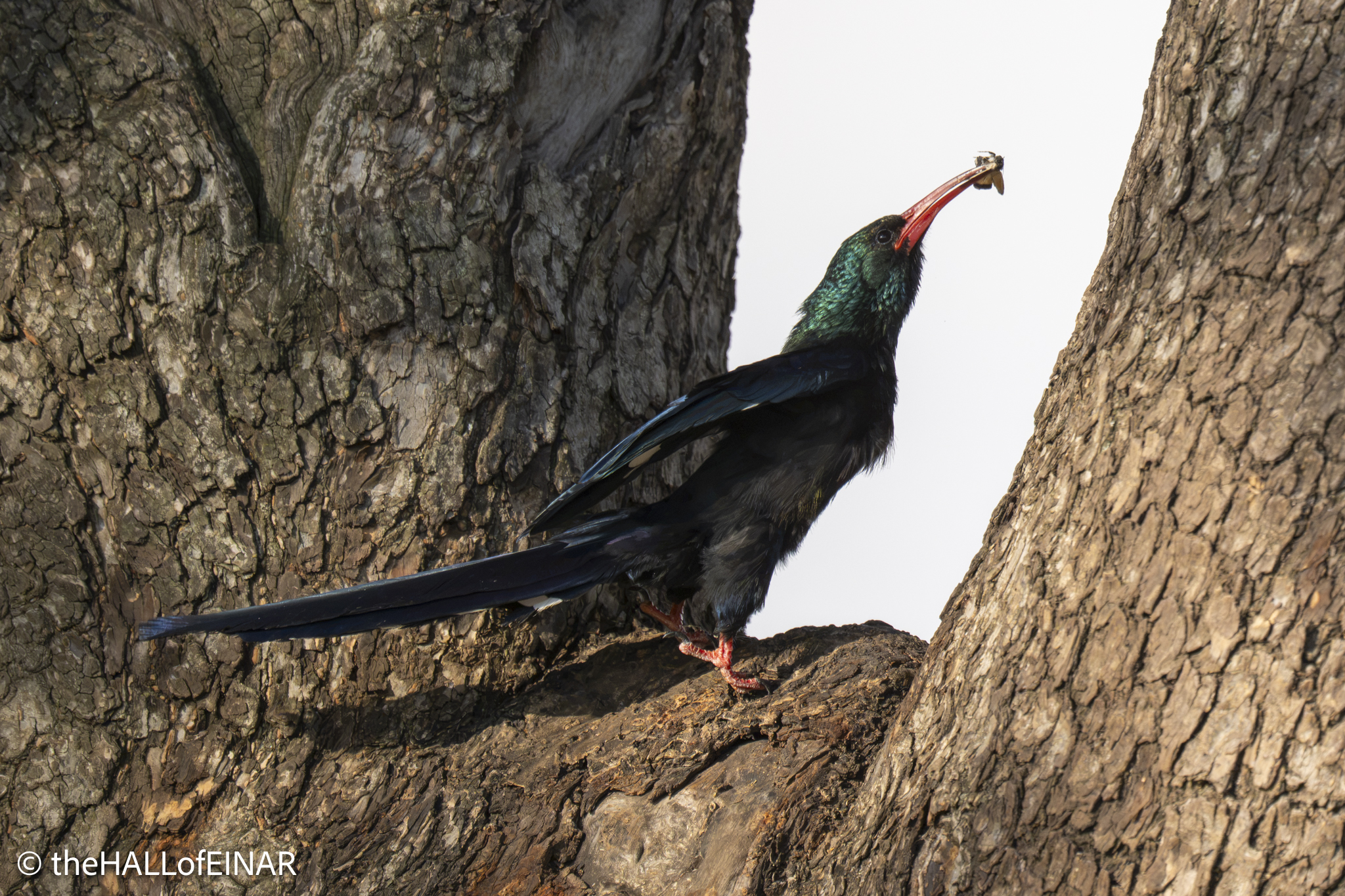
They’re clearly cooperative breeders and there could well be even more adults supporting this one nest.

Green Woodhoopoes live in groups of from two to sixteen individuals, with only one dominant couple breeding. The remaining individuals are all helpers. They might be males or females from previous broods or unrelated individuals who have joined a flock. Their role is to help the dominant couple raise their brood. It’s quite possible that they are learning all the skills necessary to raise a successful brood of their own, as well as raising brothers or sisters who will pass on their genes.
It’s clearly hungry work sitting on eggs or chicks, and the adult emerges after a call again and gets fed, this time with a caterpillar.
I could sit here all day.
I nearly did.
More adventures on safari in Kenya
 African Green Pigeon There's an African green pigeon, Treron calvus, at the top of this tree. I can hardly believe its colour. What a… read more
 On safari in the Masai Mara The twelve of us who have been volunteering in Kenya for Kenya Connect for the past eight days have been… read more
 Close to Lionesses I've already had the experience of a male Lion getting uncomfortably close to me on this safari. This time it's… read more
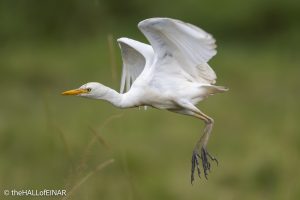 Elephant and Egret This is a Cattle Egret Someone needs to tell it that. Because this is an Elephant. read more
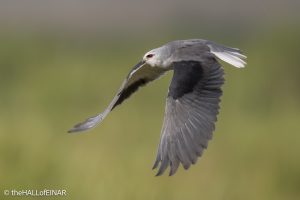 Black-Shouldered Kite There's a Black-Shouldered Kite, Elanus caeruleus, at the top of the bush. It's very far away, but we are gradually… read more
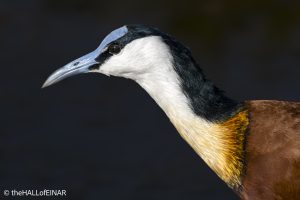 Male African Jacanas raise all the chicks Having so much food available changes the dynamics between the sexes of African Jacanas. They're a rare example of polyandry.… read more
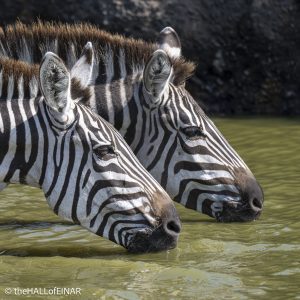 A fluffy young Zebra Seeing Zebras at a watering hole in the Masai Mara is a pleasure. It's dry work munching the parched vegetation… read more
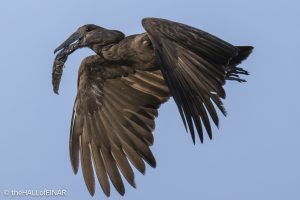 The Hammerhead There's a Hamerkop flying towards me with something huge and fishy in its beak. Hamerkops look like ducks or weird… read more
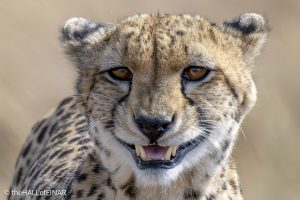 Cheetahs in the Masai Mara Gladys is driving us towards a pair of Cheetahs. "Oh yes! There". We're an excited group of four. A pair… read more
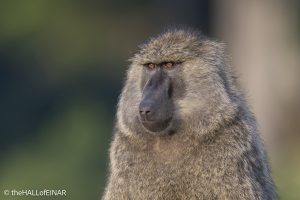 A troop of Anubis Baboons It's my last day in the Masai Mara and my last trip out in a 4x4 here. I'm about to… read more
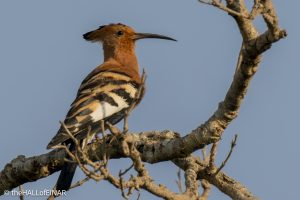 A Common Hoopoe appears I've seen a Common Hoopoe before, in Italy. It's not a bird I'm expecting to see in Kenya, yet there… read more
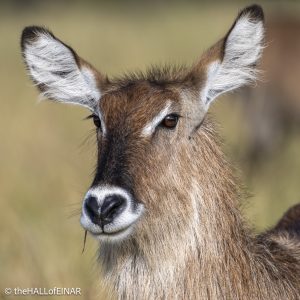 Old hairy-ears, the Waterbuck We've happened up on a small group of Waterbuck, Kobus ellipsiprymnus, here in the Masai Mara. They are large grassland… read more