Marsh Harriers
We are in Somerset. The name Somerset means Summer-land, because the land was originally only inhabitable in summer; in winter it was completely flooded. Now, very little of the original marsh is left, as drainage ditches have been built to ‘reclaim’ the land and ruin it for wildlife.
At RSPB Ham Wall there are still some large areas of marsh left, and there, Marsh Harriers live:
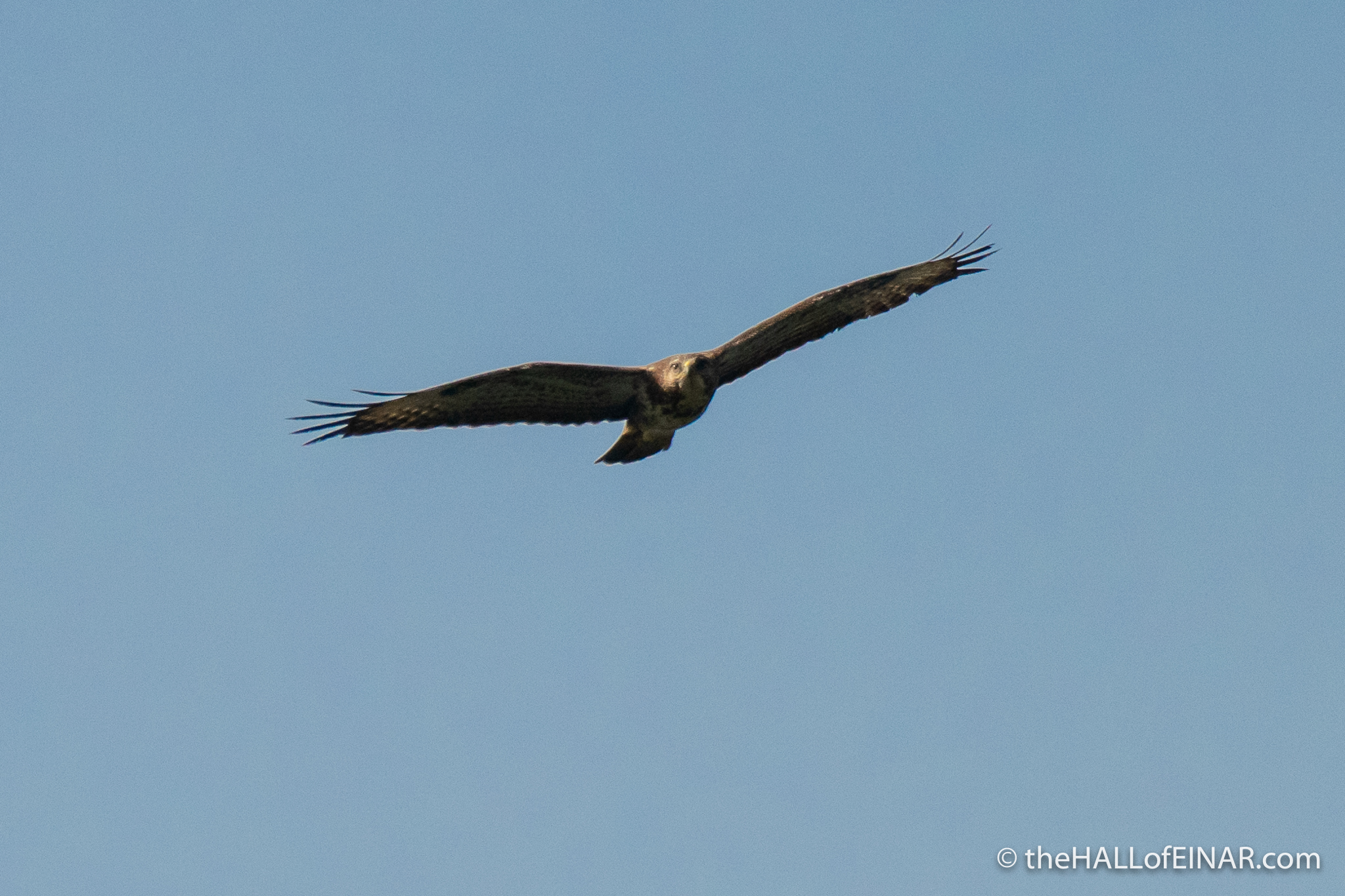
Their scientific name is Circus aeruginosus.
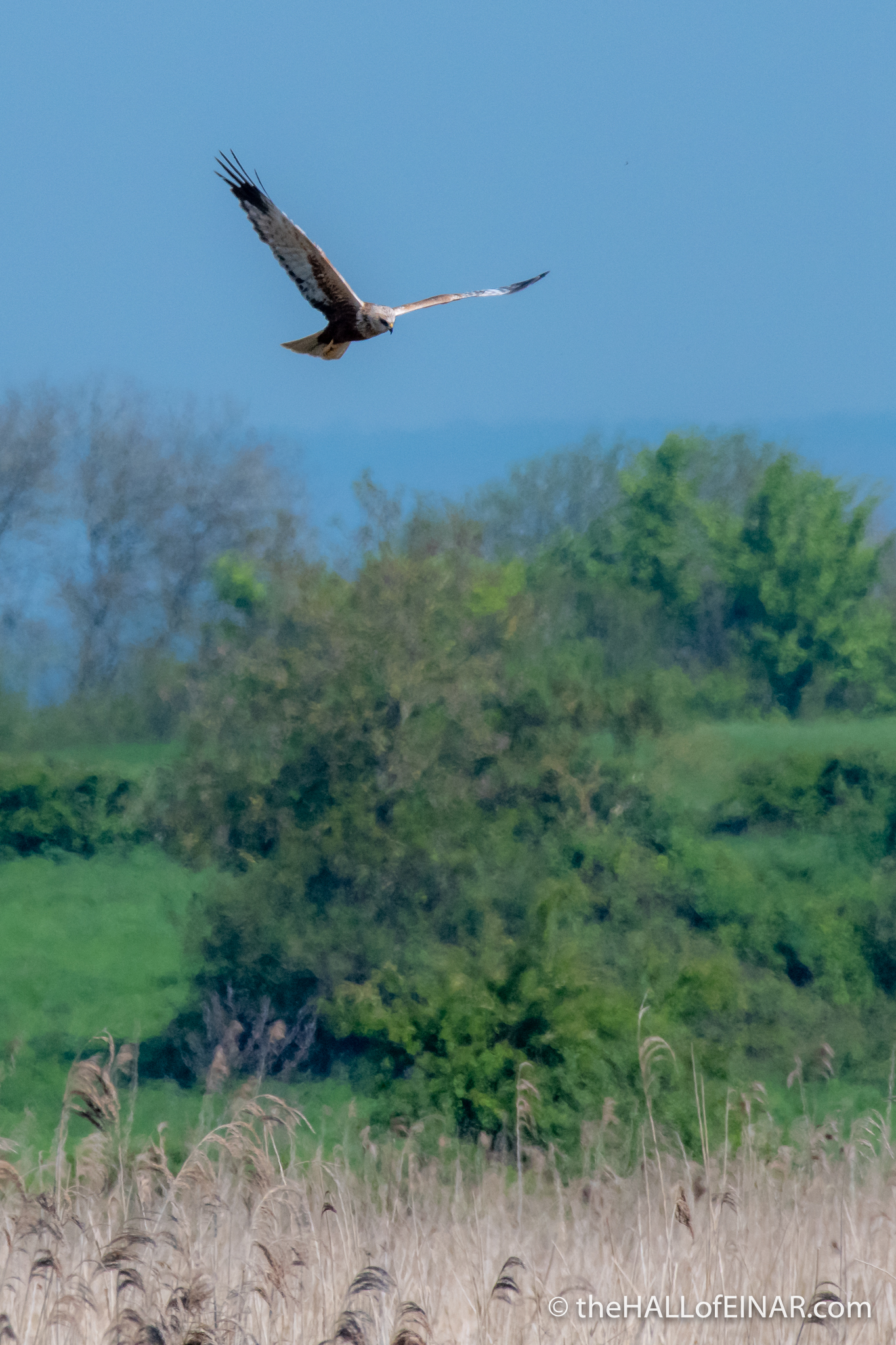
They eat ducks. There are quite a few of them sitting here.
More Marsh Harriers
 Talons bared The smaller male Marsh Harrier is chasing the larger female, which is calling loudly. The female turns upside-down in the… read more
 Marsh Harrier courtship dance The church of St Mary the Virgin in Charlton-on-Otmoor, features a tall tower that acts as a beacon in the… read more
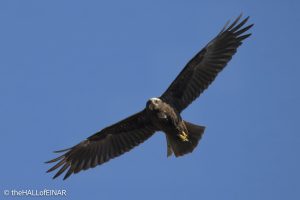 Eye contact with a Marsh Harrier This looks like an adult female Marsh Harrier. With Marsh Harriers, however, you can never be quite sure. Some adult… read more
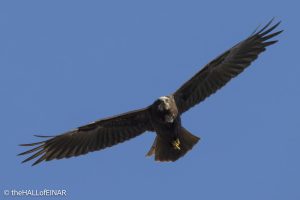 Marsh Harrier overhead I love a close Marsh Harrier. Here at RSPB Otmoor they are busy, but distant, and a pleasant hour or… read more
 Marsh Harrier I love seeing Marsh Harriers hunting. I've yet to see one kill anything yet, though. Surely it's just a matter… read more
 Marsh Harrier at Greylake We're on a trip to RSPB Greylake in Somerset. There's a male Marsh Harrier harrying the marshes. I love its… read more
 Marsh Harrier at Ham Wall I've had many happy times watching Marsh Harriers flying across RSPB reserves. Today is one of them as, after a… read more
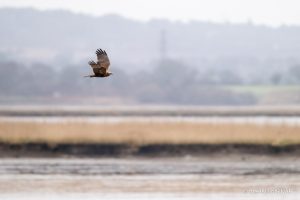 A Marsh Harrier on the marsh A trip in dull weather with Birds of Poole Harbour gave me the chance to see a very distant Marsh… read more
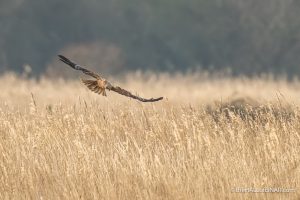 Marsh Harrier over the reeds A highlight of my trips to RSPB Lodmoor is the sight of Marsh Harriers flying over the reeds. Their languid… read more